




Turkish Lahmacun Recipe at Home: Crispy Street Food
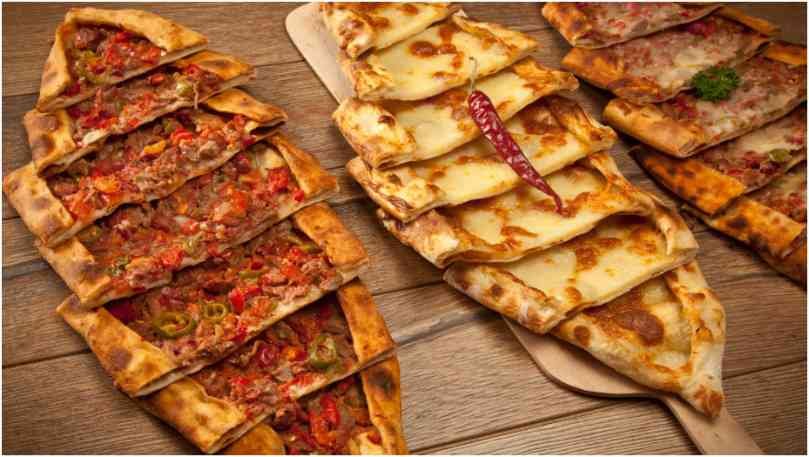
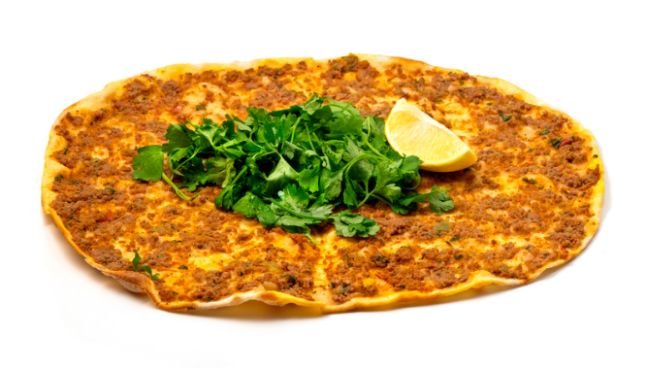
The first time I made a Turkish lahmacun recipe at home, I made one mistake: I treated it like pizza. Lahmacun is not thick, cheesy, or heavy. It should be thin, crisp at the edges, lightly chewy in the center, and topped with a finely spread meat mixture that almost melts into the dough.
This version keeps that street-food feel while using tools most US home cooks already have. A very hot oven gives the best crisp finish, but a covered skillet works surprisingly well when I want a quick batch without heating the whole kitchen.
The key is balance. The dough must be thin enough to blister. The topping must be moist enough to spread but not watery. The heat must hit fast, so the crust crisps before the topping dries out.
Ingredients for Homemade Turkish Lahmacun
Good lahmacun starts with simple ingredients. You do not need specialty equipment, but Turkish pepper paste and sumac can make the flavor much closer to what you would get from a real lahmacun shop.
For the Ultra-Thin Dough
Use 330 grams all-purpose flour or bread flour, about 2.5 cups. Add 200 ml lukewarm water, 1 tablespoon olive oil, 1 teaspoon salt, and ¼ teaspoon instant yeast if you want a softer bite.
Traditional lahmacun dough often uses little to no yeast. I prefer the tiny amount because it gives the dough a little flexibility without turning it into pizza dough.
For the Spiced Meat Topping
You need 350 grams ground beef or lamb. A 20–25% fat content works best because lean meat can turn dry.
Add 2 ripe tomatoes, 1 medium onion, 2–3 garlic cloves, 1 red bell pepper or Capia pepper, 2 Turkish green peppers or mild green bell peppers, and a large handful of flat-leaf parsley.
For deep flavor, mix in 1 tablespoon tomato paste and 1 tablespoon Turkish red pepper paste. Season with 1.5 teaspoons salt, 1 teaspoon paprika, ½ teaspoon black pepper, and ½ teaspoon cumin. If you can find isot or Aleppo pepper, add ½ teaspoon for smoky warmth.
How to Make Lahmacun Dough Thin and Crisp
Add lukewarm water, olive oil, salt, and yeast to a bowl. Stir until combined, then add flour gradually. Knead for 5–6 minutes until the dough feels smooth, soft, and not sticky.
Divide the dough into 6 balls. Each one should weigh around 90 grams. Cover them with a clean towel and rest for 20–30 minutes.
That rest matters. It relaxes the gluten, which helps the dough roll thin without snapping back. For a proper Turkish lahmacun recipe at home, I aim for dough that is 1–2 mm thick. If it feels too thick, it will bake like flatbread instead of crisp lahmacun.
How to Make the Lahmacun Meat Topping
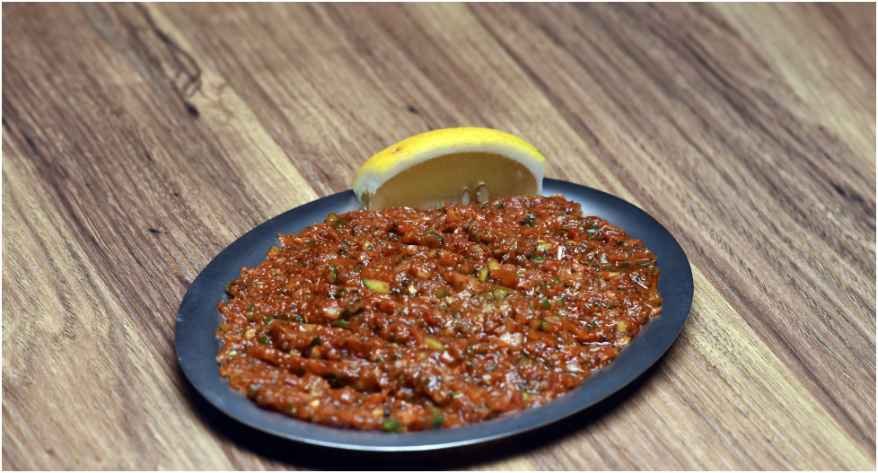
Roughly chop the onion, garlic, tomatoes, peppers, and parsley. Pulse them in a food processor until finely minced. Do not turn them into juice. The texture should look tiny and wet, not smooth like sauce.
Transfer the vegetables to a bowl. Add ground meat, tomato paste, pepper paste, and spices. Mix with your hands until the topping becomes soft and spreadable.
This is where many home versions fail. If the meat mixture is too chunky, it will sit on top of the dough. If it is too dry, it will not spread to the edges. I add 2–3 tablespoons of cold water if the mixture feels stiff. The final texture should be like a loose paste.
How to Assemble Turkish Lahmacun Like Street Food
Preheat your oven as high as it goes, ideally 450°F to 480°F. Place a pizza stone, baking steel, or inverted baking sheet inside while it heats.
Roll one dough ball into a thin circle or oval. Keep the other dough balls covered so they do not dry out. Move the rolled dough onto parchment paper before adding the topping.
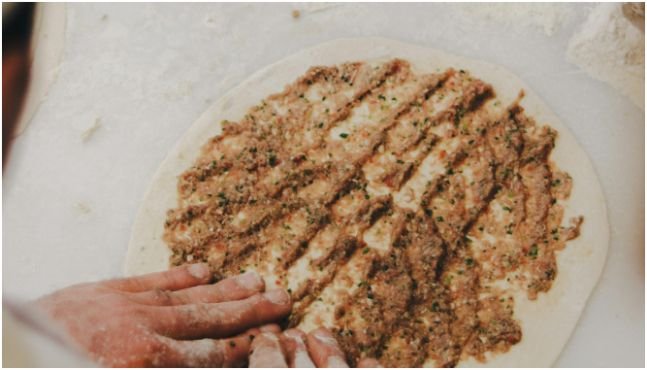
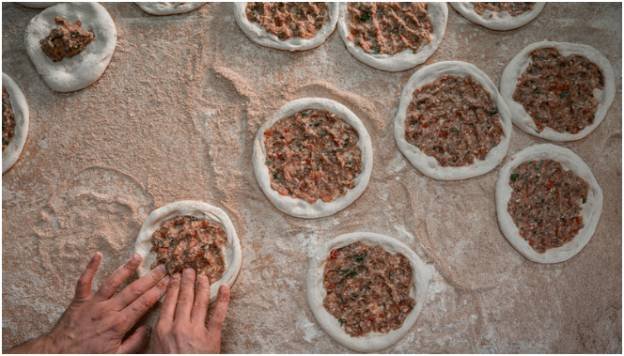
Spread 2–3 tablespoons of meat mixture over the dough. Use your fingertips, not a spoon, because your fingers help push the mixture thinly across the surface. Take it right to the edges. Bare edges puff too much and make the lahmacun feel more like pizza.
Best Ways to Cook Lahmacun at Home
A Turkish lahmacun recipe at home needs high heat and speed. The crust should cook quickly while the topping stays juicy.
Oven Method
Slide the parchment with the lahmacun onto the hot stone, steel, or inverted tray. Bake for 5–7 minutes. The edges should brown, the bottom should feel crisp, and the meat should sizzle.
In my kitchen, 6 minutes at 475°F gives the best result. If your oven runs cooler, give it another minute. Avoid overbaking because the meat topping can dry out fast.
Stovetop Skillet Method
Heat a large nonstick or cast-iron skillet over medium-high heat. Place one lahmacun in the dry pan. Cover it immediately with a tight lid.
Cook for 4–5 minutes. The lid traps steam, which helps cook the meat, while the hot pan chars the bottom. This method gives darker spots and a slightly softer top, but it works beautifully for small kitchens.
How to Serve Lahmacun the Turkish Way
Stack cooked lahmacuns meat-side to meat-side and cover them with a towel. This keeps them warm and slightly flexible without making them soggy.
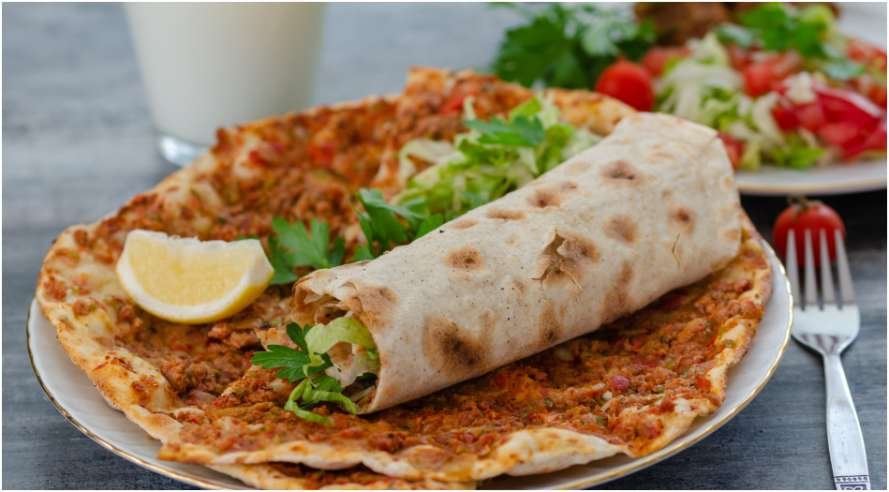
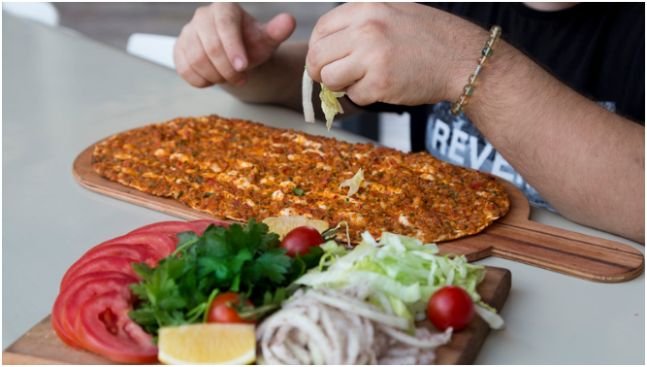
Serve each lahmacun with flat-leaf parsley, thin red onion tossed with sumac, tomato slices, and fresh lemon. Squeeze lemon over the top, add herbs and onion, then roll it tightly.
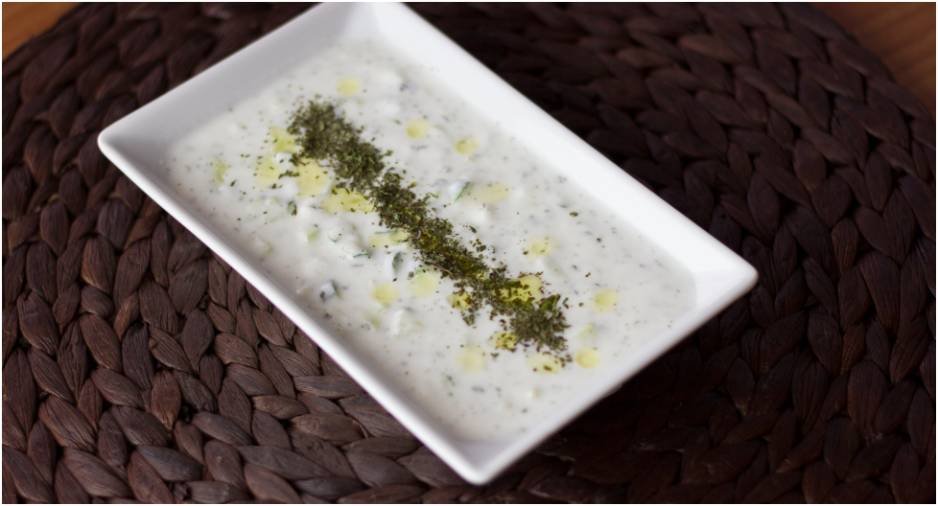
For a fresh side, pair it with Turkish cacik recipe with yogurt. The cool greek yogurt, cucumber, and garlic contrast perfectly with the warm spices in lahmacun.
A glass of ayran also works well. It is a salty yogurt drink made with yogurt, cold water, and a pinch of salt.
My Tested Tips for Better Homemade Lahmacun
The best homemade lahmacun comes from small adjustments. I chill the meat topping for 15 minutes before spreading because it firms slightly and becomes easier to handle.
I also blot very juicy tomatoes before pulsing them. Too much tomato water can soften the dough before it reaches the oven.
For crispness, parchment helps with transfer, but direct contact with a hot stone works even better. After the dough sets for 2 minutes, you can gently slide the parchment out if your oven setup allows it.
If you want a stronger Turkish flavor, use lamb instead of beef or mix both. Beef is easier to find in US grocery stores, but lamb brings a richer street-food aroma.
Food Safety Note for Ground Meat
Because lahmacun uses a raw ground meat topping, cook it fully. USDA guidance lists 160°F as the safe minimum internal temperature for ground meats. A thin lahmacun cooks quickly, but the topping should never look raw or glossy after baking.
Do not leave the meat topping at room temperature while making multiple batches. Keep extra topping refrigerated and bring out only what you need.
FAQs About Turkish Lahmacun Recipe at Home
1. Can I make Turkish lahmacun without a pizza stone?
Yes, use an inverted baking sheet preheated at the highest oven setting, or cook lahmacun in a covered skillet.
2. Is lahmacun dough the same as pizza dough?
No, lahmacun dough is thinner, lighter, and usually has little to no yeast.
3. Can I freeze homemade lahmacun?
Yes, freeze cooked lahmacun between parchment sheets, then reheat in a hot oven or skillet.
4. What meat is best for lahmacun?
Lamb gives the most traditional flavor, but ground beef or a beef-lamb mix also works well.
Final Bite: Roll It, Squeeze It, Own It
Once I stopped treating lahmacun like pizza, everything changed. Thin dough, finely spread topping, high heat, lemon, parsley, and sumac onion make the whole thing feel alive.
Make one batch, taste the first piece hot, then adjust the next one. Add more pepper paste, roll thinner, or cook it darker. That is the fun of making Turkish lahmacun recipe at home: every round gets sharper, crispier, and more yours.