
Fillo Dough Baklava Recipe For Crispy Turkish-Style Layers
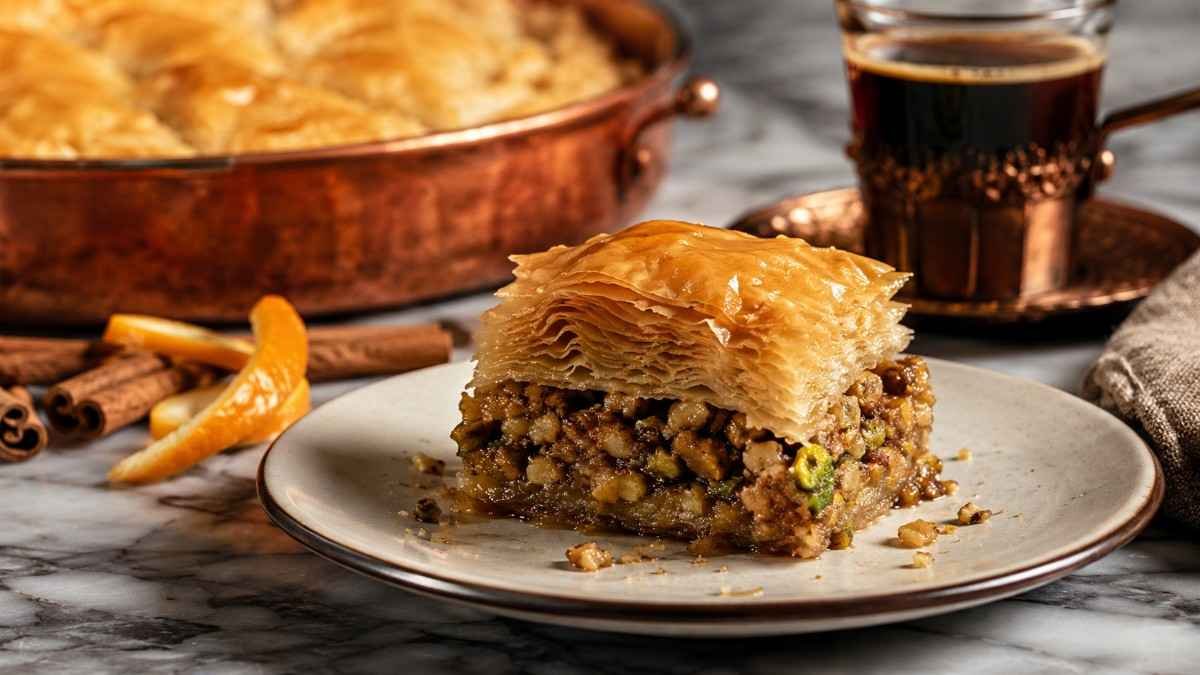
Golden, sticky, and beautifully crisp, fillo dough baklava is one of those desserts that makes a kitchen smell like a celebration. My favorite part is the contrast: delicate pastry, buttery layers, spiced nuts, and syrup that settles into every cut without making the tray heavy or soggy.
Baklava is a classic Middle Eastern and Mediterranean dessert, loved across Turkish cuisine,
Greek kitchens, and rustic family baking traditions. It looks impressive, but the method is surprisingly simple when you follow the right order. With thawed filo dough, melted butter, chopped nuts, and warm syrup, this make-ahead sweet becomes a dependable treat for holidays, tea time, and homemade gifting.
Key Takeaways
- Fillo and phyllo are the same pastry.
- Use thawed dough.
- Butter each sheet well.
- Cut before baking.
- Pour hot syrup over hot baklava for deep flavor.
Key Ingredients For Baklava
A great tray starts with familiar ingredients that work together for crunch, aroma, and sweetness.
Filo Dough
Filo dough, also called fillo or phyllo dough, is the delicate pastry used for baklava. You need one standard 1-pound box of commercial filo dough, completely thawed before use. Thawing matters because cold or partly frozen sheets crack, stick, and tear easily.
Keep the dough covered while working. A slightly damp towel over plastic wrap helps stop the sheets from drying out. Do not place a wet towel directly on the filo, because moisture can make the layers gummy instead of crisp.
Butter And Ghee
Use 1 to 1.5 cups of unsalted butter or ghee, melted until smooth. Butter gives baklava its golden color, rich aroma, and flaky separation between each paper-thin sheet. Ghee adds a slightly nuttier flavor and works beautifully in rustic Turkish-style baking.
Brush generously, but avoid leaving large puddles. Every layer should feel lightly coated, not soaked. This balance is what helps the pastry bake up crisp rather than greasy.
Nut Filling And Syrup
For the filling, combine 3 to 4 cups of finely chopped walnuts, pistachios, or pecans with 1 1/2 teaspoons cinnamon and 1/4 cup sugar. Walnuts taste earthy and cozy, while pistachios give a more traditional Turkish touch. Pecans add soft sweetness and a buttery bite.
For the syrup, use 1 cup sugar, 1 cup water, 1 cup high-quality honey, a strip of lemon or orange peel, and 1 cinnamon stick. The citrus peel keeps the syrup bright, while cinnamon adds gentle warmth. Honey gives that sticky, fragrant finish baklava is known for.
Fillo Dough Baklava Method
This how-to section keeps the process clear, practical, and easy to follow.
Prep The Pan
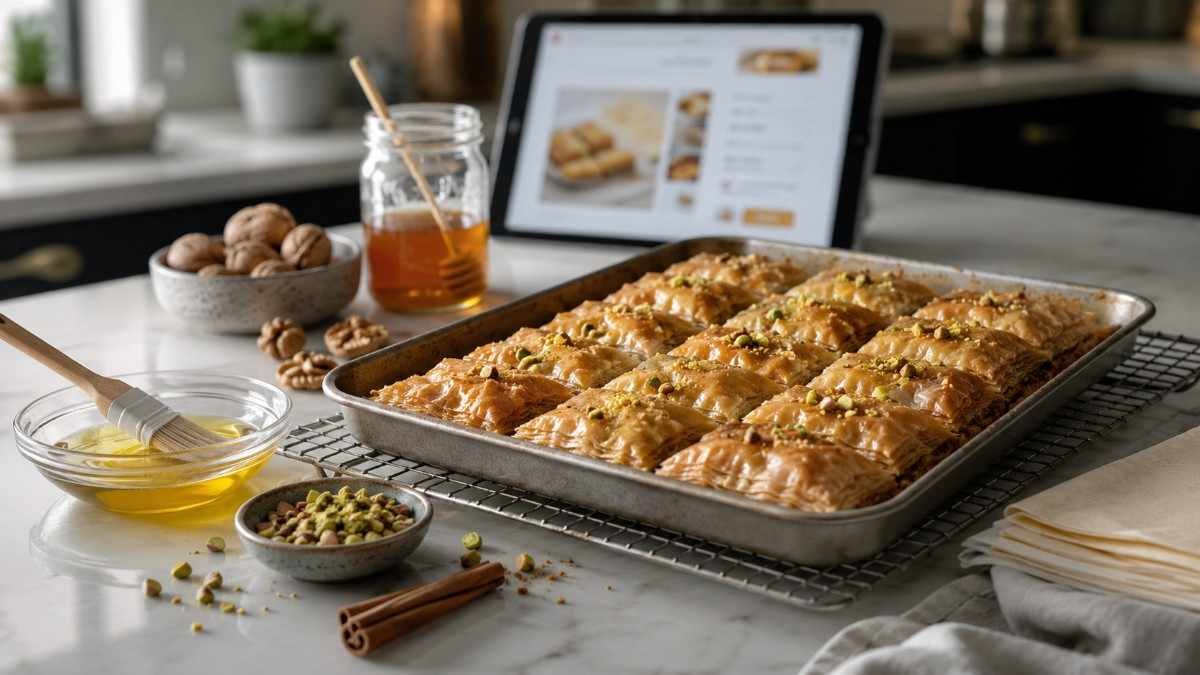
To make fillo dough baklava, preheat your oven to 350°F and heavily butter a 9 x 13-inch baking pan. This creates a flavorful base and helps the bottom sheets crisp instead of sticking. Trim your filo dough to fit the pan if needed.
Set up your workspace before opening the dough. Keep the melted butter, pastry brush, nut filling, baking pan, and sharp knife nearby. Filo dries quickly, so an organized counter makes the whole process calmer and smoother.
Build The Bottom Layers
Lay down 8 to 10 sheets of filo dough, brushing each individual sheet generously with melted butter. This base gives the baklava structure, so do not rush it. Place each sheet flat, smooth it gently, and butter the edges where dryness often starts.
If a sheet tears, use it anyway. Baklava is forgiving because the layers stack together. Save the neatest sheets for the top, where appearance matters most.
Add The Nut Layers
Sprinkle a thin, even layer of your nut mixture over the buttered filo. The key is even coverage, not thick clumps. A balanced nut layer helps every square or diamond taste the same.
Add 4 to 5 more layers of buttered filo, then another layer of nuts. Repeat this pattern until the nut filling is used. This middle section creates the signature flaky pastry and flavorful nut filling that make baklava so satisfying.
Top Layers, Scoring, And Baking
This stage gives baklava its crisp top, clean shape, and bakery-style finish.
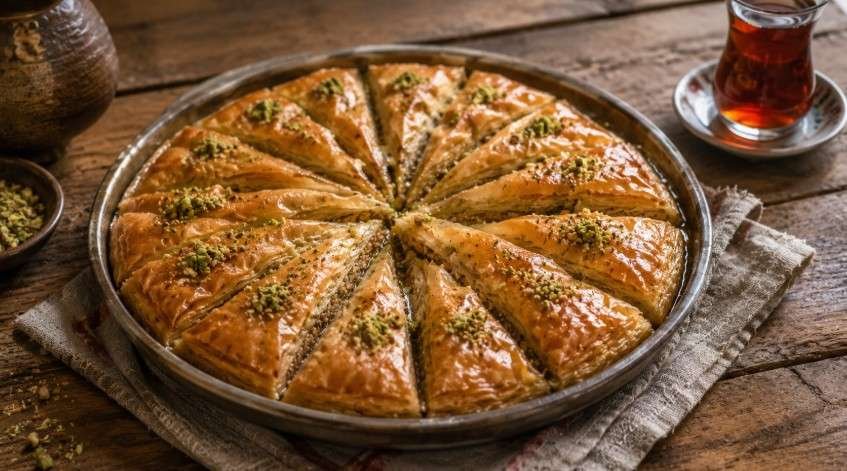
Finish The Layers
Top the final nut layer with 8 to 10 buttered sheets of phyllo dough. These upper layers bake into a crisp, golden shell, so butter them carefully from corner to corner. A strong top layer also protects the filling while the syrup soaks in later.
Gently press the surface with your hands to settle everything, but do not flatten it too hard. Baklava should stay layered and light, not compact.
Score Before Baking
Before baking, use a very sharp knife to slice all the way through the layers. Cut diamonds, squares, or rectangles, depending on your serving style. This step is essential because baked filo shatters if you try to cut it after it crisps.
Scoring also helps the syrup travel into every piece. Clean cuts mean cleaner serving, better syrup absorption, and prettier presentation for gatherings.
Bake Until Deeply Golden
Bake for about 50 minutes, or until the baklava is deeply golden brown and crisp. Do not remove it when it is only pale gold. The pastry needs time to dry, toast, and become flaky.
The edges should look browned, the top should feel crisp, and the kitchen should smell buttery and nutty. That deep bake is one of the best defenses against soggy baklava.
The Syrup Step
The syrup is where sweetness, shine, and texture come together.
Boil The Syrup
While the baklava bakes, combine the sugar, water, honey, citrus peel, and cinnamon stick in a saucepan. Bring it to a boil, then simmer for 15 to 20 minutes until slightly thickened. Remove the peel and cinnamon stick before pouring.
The syrup should feel glossy, not watery. A slightly thick syrup clings to the pastry and nuts, giving each bite a rich, sticky finish.
Pour While Hot
Pour the hot syrup over the baklava immediately as it comes out of the oven. You should hear a gentle sizzle as the syrup meets the crisp pastry. This hot-on-hot method helps the syrup absorb fully without sitting on top.
Pour slowly and evenly, especially along the cuts. Let the tray rest so the syrup can settle through the layers. Baklava tastes best after several hours, and many bakers prefer it the next day.
Tips For Crispy Baklava
These practical details help you avoid the most common homemade baklava mistakes.
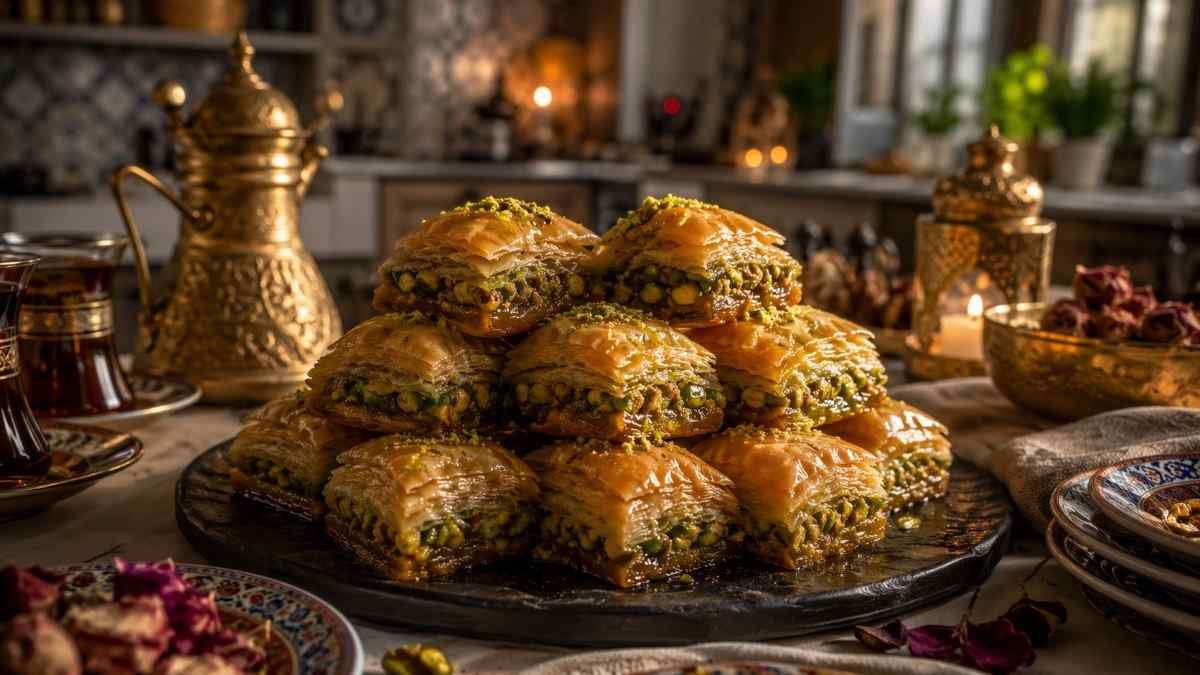
Keep Filo Protected
Filo dough dries out fast, so always keep unused sheets covered. Dry sheets become brittle and hard to brush. A protected stack stays flexible, making layering easier and cleaner.
Work gently but confidently. You do not need perfect sheets in every layer. The final texture depends more on steady buttering, even filling, and proper baking than flawless pastry handling.
Balance Butter And Syrup
Butter every layer of phyllo dough for baklava, but keep the coating thin and even. Too little butter can make the pastry dry, while too much can weigh it down. The best result is crisp, rich, and light.
Syrup matters too. Pour it carefully, then let the dessert rest uncovered or loosely covered. Tight wrapping traps steam and can soften the top.
Gentle Health Benefits
Baklava is a dessert, but some of its ingredients bring useful nourishment.
Nuts Bring Healthy Fats
Walnuts, pistachios, and pecans contain plant-based fats, fiber, and minerals. Walnuts offer omega-3 fatty acids, while pistachios add antioxidants and a little protein. These nuts make a small piece feel satisfying.
Because baklava is rich, portion size matters. One small diamond with tea or coffee can feel indulgent without needing a large serving.
Spices And Honey Add Depth
Cinnamon brings warmth and natural sweetness, which helps the filling taste fuller. Honey gives floral flavor and a sticky finish. Lemon or orange peel brightens the syrup and keeps the dessert from tasting flat.
Homemade baklava also lets you choose better ingredients. Real butter, quality honey, and fresh nuts make a noticeable difference.
Frequently Asked Questions
1. Is Fillo Dough And Phyllo Dough The Same?
Yes, fillo dough and phyllo dough are the same paper-thin pastry. Filo is another spelling. All three are used for baklava, savory pies, and Mediterranean pastries.
2. How Many Layers Of Phyllo Dough Are In Baklava?
Most baklava recipes use around 30 to 40 total sheets. The exact number depends on your pan size, filo package, and how many nut layers you prefer.
3. What Type Of Dough Is Used For Baklava?
Baklava uses filo, fillo, or phyllo dough. This thin pastry bakes into crisp, flaky layers when brushed with melted butter or ghee.
4. Should I Butter Every Layer Of Phyllo Dough For Baklava?
Yes, butter every layer lightly and evenly. This separates the sheets, improves flavor, and helps the pastry bake into the crisp texture baklava is famous for.
Sweet Tray, Happy Day
A homemade tray of fillo dough baklava brings rustic baking and Turkish cuisine together in the most delicious way. With thawed filo, buttery layers, spiced nuts, careful scoring, and hot syrup, you get a crisp, sticky, make-ahead dessert that feels special without being complicated. Let it rest, share it proudly, and enjoy every flaky bite.