



Homemade Magic: Turkish Phyllo Dough Recipe For Yufka
A warm kitchen, a dusting of starch, and paper-thin dough stretched across the table can make baking feel beautifully old-world. This turkish phyllo dough recipe is my favorite way to bring authentic yufka into rustic home baking, whether you are craving crisp baklava layers or a flaky savory börek.
What Is Turkish Yufka?
Yufka is the traditional Turkish pastry sheet used in börek, gözleme, baklava-style sweets, and layered savory bakes.
Yufka And Phyllo
Yufka is often compared to phyllo, also spelled filo, because both are rolled very thin. The difference is texture. Yufka is usually a little sturdier and more flexible, while Greek-style phyllo is thinner, drier, and more delicate.
For rustic Turkish baking, yufka gives you that lovely balance of crisp edges and tender layers. It can be baked fresh, lightly cooked on a griddle, or layered with fillings and sauces for savory borek.
Real Turkish Flavor
Authentic yufka is not complicated. It is made from flour, water, salt, olive oil, and vinegar. The magic comes from kneading, resting, starching, and rolling the dough until it is almost translucent.
The result is a sheet that can turn shatteringly crisp in baklava or beautifully flaky in cheese, spinach, potato, or meat börek recipe. It is simple, humble, and deeply satisfying.
Key Ingredients And Equipment
A great dough starts with basic ingredients and the right rolling setup.
Flour, Water, And Salt
Use 3.5 to 4 cups of all-purpose flour, starting with less and adding more only if needed. Lukewarm water hydrates the dough evenly, while salt adds simple but important flavor, especially for savory börek.
Olive Oil And Vinegar
Olive oil keeps the dough soft, smooth, and easy to knead. A little vinegar helps relax the dough, so it rolls thinner without shrinking back or tearing too quickly.
Starch And Oklava
Use wheat or corn starch while rolling to stop the sheets from sticking. An oklava, or long wooden dowel, helps stretch the dough evenly into thin, flexible yufka sheets.
How To Make Turkish Phyllo Dough Recipe
This turkish phyllo dough recipe follows the traditional rhythm: mix, knead, rest, divide, roll, stretch, and use.
Make The Dough
Whisk water, olive oil, vinegar, and salt, then gradually mix in flour until a soft dough forms. Knead until smooth and elastic, adding flour only if it feels too sticky.
Rest And Roll
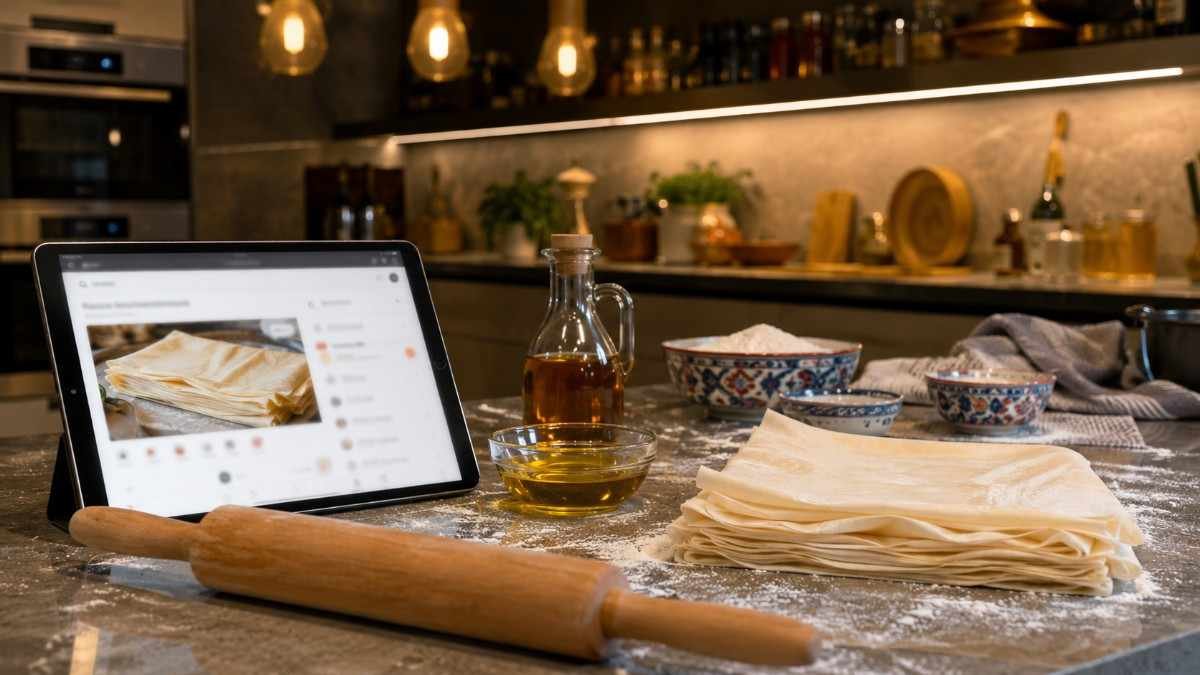
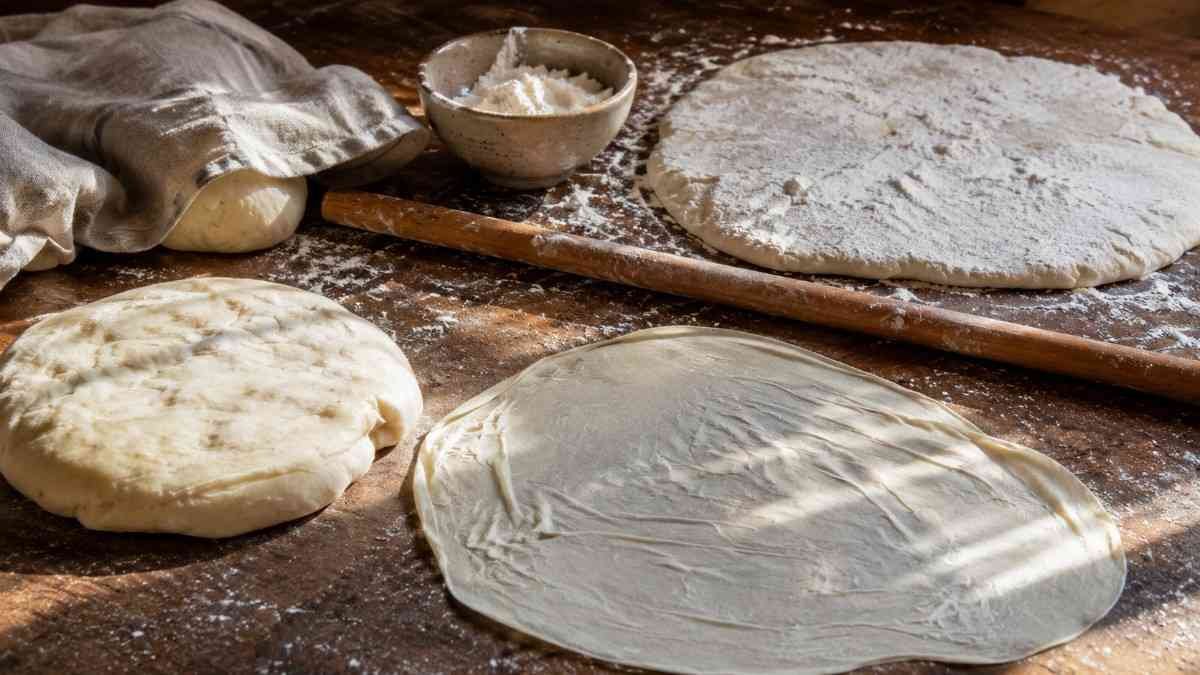
Cover the dough for 10 to 15 minutes, then divide it into 6 to 8 balls. Roll each one on a starched surface into small rounds, stacking with starch between layers.
Stretch Thin
Use an oklava to roll and gently stretch each round until paper-thin and almost translucent. Turn often and add starch as needed to prevent sticking.
Use Or Lightly Cook
Use fresh yufka for börek, baklava, or rolls. For soft börek, lightly griddle each sheet for 30 seconds per side.
Best Uses For Homemade Yufka
Once you master yufka, it becomes one of the most useful doughs in Turkish cuisine.
Börek
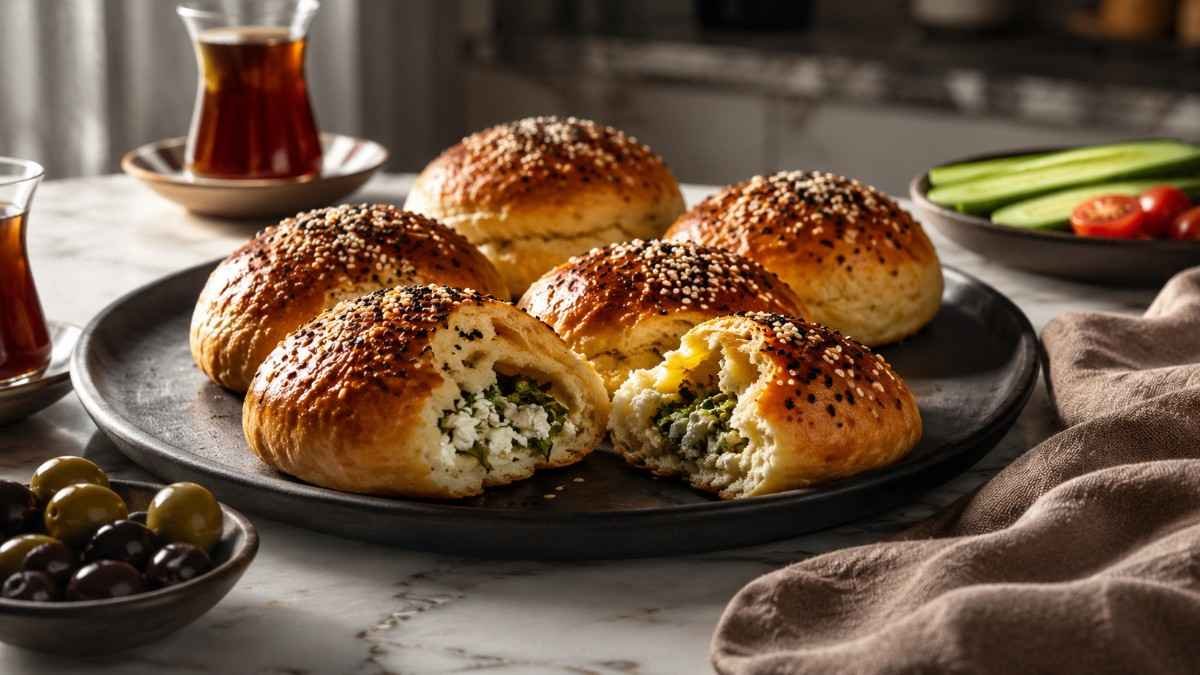
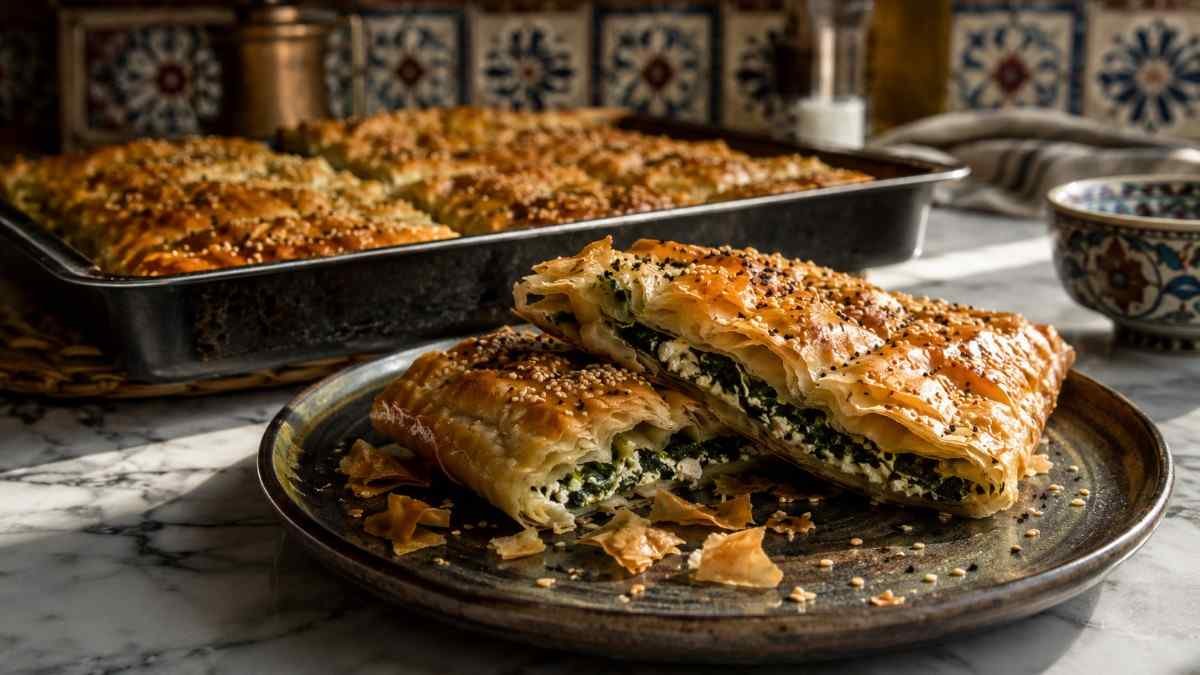
Börek is the most popular savory use for yufka. Layer the sheets with a yogurt, egg, milk, and olive oil mixture, then add fillings like spinach and feta, potato, ground beef, herbs, or Turkish white cheese.
Homemade yufka holds moisture better than very delicate phyllo. That makes it perfect for tray börek, rolled borek, or a rustic spiral shape baked until golden.
Baklava
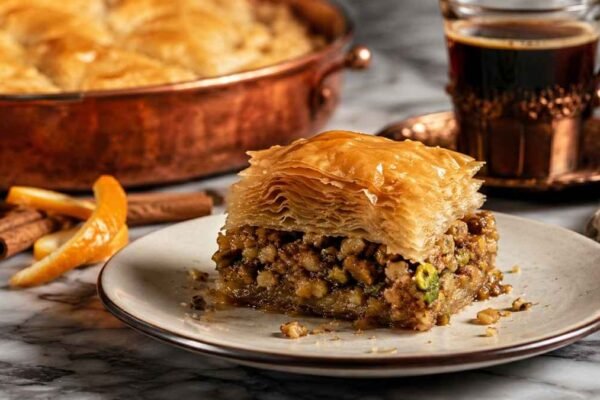
For baklava, roll the sheets as thin as possible. The thinner the yufka, the crispier and more delicate the final dessert becomes.
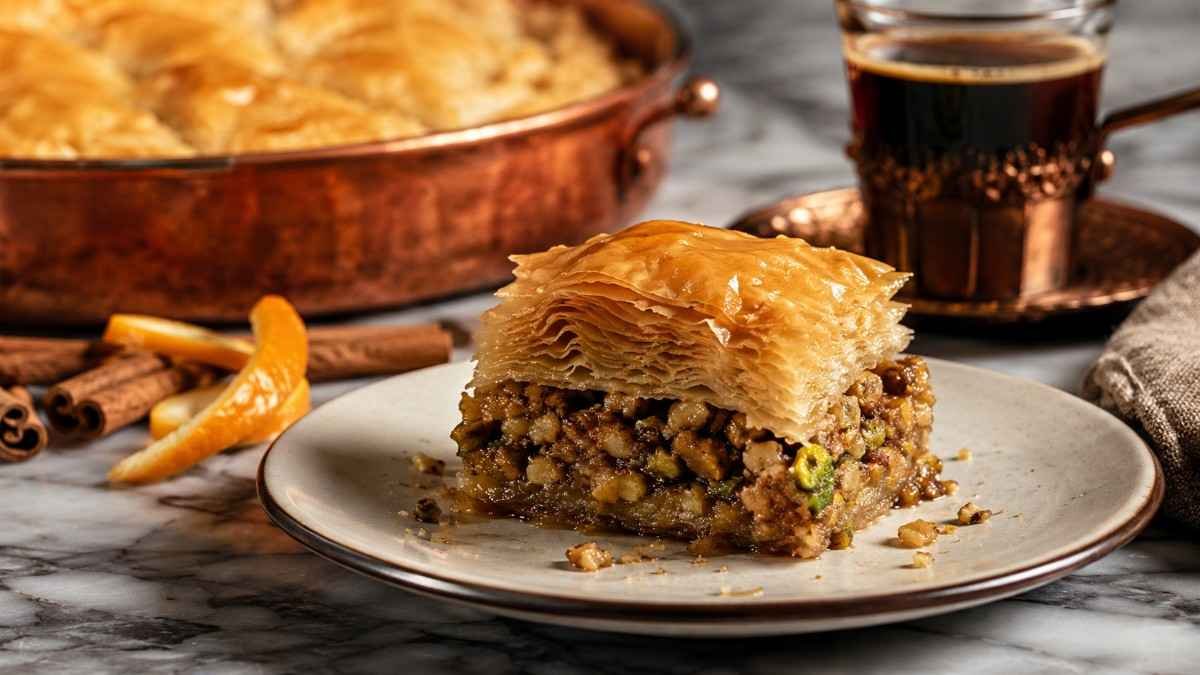
Layer it with butter and crushed pistachios or walnuts, then bake until golden. A warm syrup poured over crisp layers gives baklava its classic glossy finish.
Gözleme And Flatbreads
Yufka also works beautifully for gözleme, a filled Turkish flatbread cooked on a hot pan. Add spinach, cheese, potato, or minced meat, then fold and cook until spotted and crisp. Serve with lamb stew with veggies.
This is a wonderful real-life use for extra dough because it is quick, filling, and easy to serve with yogurt, olives, tomato salad, or Turkish tea.
Smart Rolling Tips
Good rolling is less about force and more about patience.
Keep Dough Covered
Dry dough cracks quickly, especially around the edges. Keep unused dough balls and rolled sheets covered with a damp towel while you work.
The towel should be barely damp, not wet. Too much moisture can make the dough sticky and difficult to separate.
Use Enough Starch
Do not be shy with starch during rolling. It keeps layers from sticking and helps the oklava glide smoothly across the dough.
If the dough begins grabbing the rolling pin, sprinkle a little more starch, lift the sheet gently, and continue. Sticking usually means the surface needs more dusting.
Roll Evenly
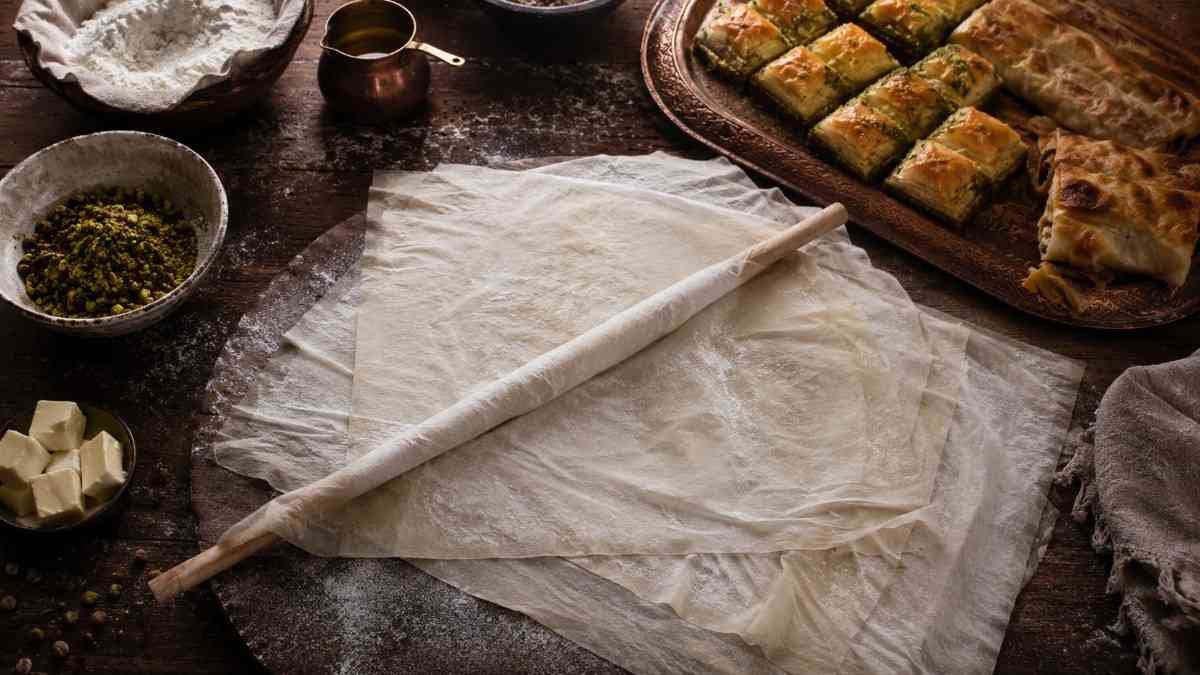
Turn the dough often so it stretches in all directions. If one side becomes too thin too soon, focus on the thicker side with lighter pressure.
Tiny tears are not a disaster. For börek, they disappear inside the layers. Save the neatest sheets for the top if presentation matters.
Health Benefits Of Yufka
Homemade yufka can be part of a balanced rustic meal when paired with smart fillings.
Simple Ingredients
This dough uses no preservatives, artificial flavors, or unnecessary additives. You know exactly what goes into it: flour, water, salt, olive oil, and vinegar.
Because the ingredients are simple, the final dish depends on how you fill and bake it. Spinach, herbs, lentils, cheese, or lean meats can make yufka-based dishes more nourishing.
Olive Oil Goodness
Olive oil brings unsaturated fats and a rounded flavor that fits Turkish and Mediterranean cooking. It also improves dough texture without needing large amounts of fat.
For a lighter bake, brush layers gently instead of soaking them. You still get flaky texture without making the pastry feel greasy.
Better Filling Choices
Spinach adds health benefits like fiber folate, and vitamin K. Feta or Turkish white cheese adds protein and calcium, while herbs bring freshness without extra heaviness.
For a wholesome plate, serve borek with cucumber salad, yogurt, tomatoes, olives, or lentil soup. This makes the meal more balanced and satisfying.
Common Mistakes To Avoid
These simple fixes can save your dough from tearing, sticking, or baking badly.
Skipping The Rest
Resting may feel optional, but it changes everything. Dough that has not rested fights the rolling pin and shrinks back again and again.
Even 10 to 15 minutes helps. For easier rolling, you can rest the dough slightly longer while covered.
Using Too Much Flour
Flour can make the sheets tough if used heavily during rolling. Starch is the better choice because it separates layers and keeps the texture light.
Use flour only during the first kneading stage. Once you begin rolling, switch to wheat starch or corn starch.
Rolling Too Thick
Thick yufka can taste doughy and heavy, especially in baklava. Aim for sheets thin enough to see light through them.
For börek, the sheets can be slightly thicker than baklava sheets, but they should still feel flexible, soft, and easy to layer.
Frequently Asked Questions
1. What Is Filo Dough In Turkish?
In the turkish phyllo dough recipe world, filo dough is closest to yufka. Yufka is the Turkish pastry sheet used for börek, baklava-style desserts, gözleme, and layered savory pies.
2. What Is The Difference Between Borek & Spanakopita?
Borek is a Turkish pastry made with yufka or phyllo and many fillings. Spanakopita is Greek, usually made with spinach, feta, herbs, and phyllo, with a more specific filling style.
3. What Is Turkish Borek Made Of?
Turkish borek is usually made with yufka, a savory filling, and a moist sauce. Common fillings include spinach, white cheese, feta, potato, minced meat, parsley, dill, and onions.
4. What Are Common Borek Mistakes?
Common borek mistakes include wet filling, dry pastry sheets, too little sauce, thick dough, weak seasoning, and underbaking. Cutting before baking also helps the pieces stay neat.
Flaky Finish: Bake It The Turkish Way
This turkish phyllo dough recipe is more than a dough lesson. It is a doorway into rustic Turkish baking, where flour, water, olive oil, vinegar, and patience become delicate yufka. Roll it thin, keep it soft, fill it generously, and let those golden layers bring homemade Turkish comfort straight to your table.