


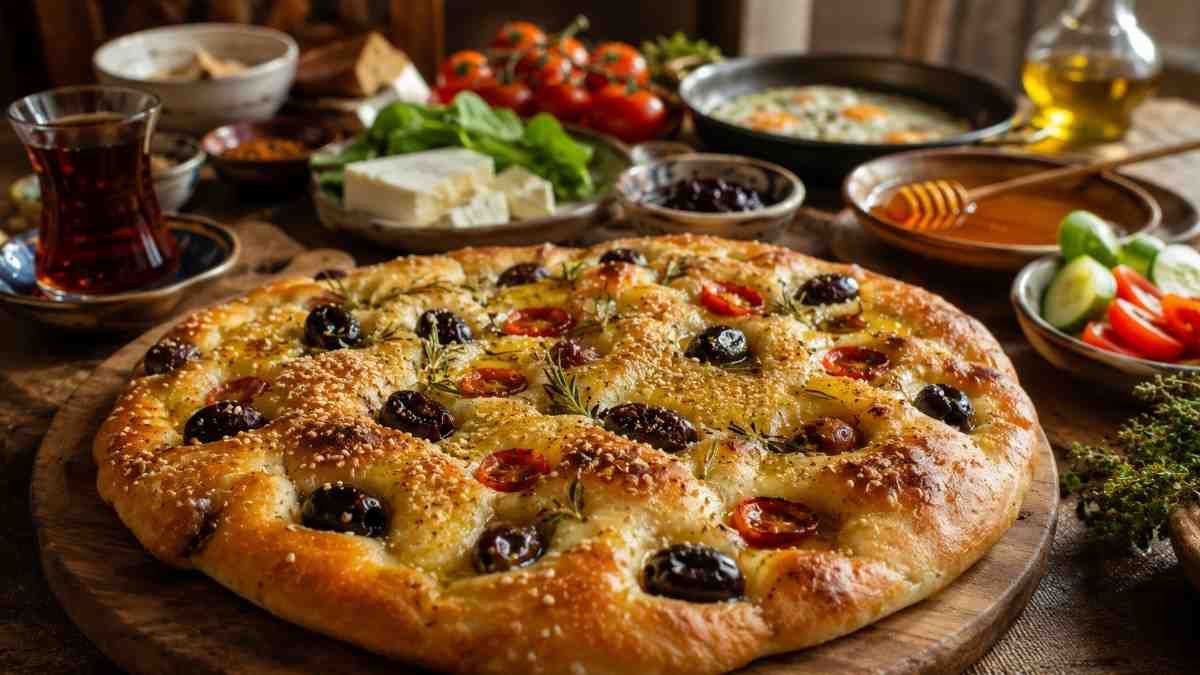
No-Mixer How To Make Focaccia Bread With Olive Oil
Warm olive oil, rosemary, and a golden crust can make a simple kitchen feel like a rustic bakery. Learning how to make focaccia bread is one of those small joys that feels fancy but is surprisingly relaxed. This version fits beautifully into Rustic Baking and Turkish Cuisine, especially with olives, za’atar, sesame, tomatoes, and herbs.
This no-knead focaccia bread recipe gives you a pillowy-soft center, bubbly top, and crisp olive oil crust without a stand mixer or special tools. It is easy enough for beginners, flavorful enough for guests, and flexible enough for breakfast spreads, soups, meze platters, or cozy weeknight dinners.
Ingredients For Focaccia
Simple ingredients do the heavy lifting here.
Bread Flour
Bread flour gives focaccia its chewy bite and open crumb. Use 4 cups, or about 500 grams, for the best texture. Its higher protein helps trap air during fermentation, which creates bigger bubbles and a stronger structure.
All-purpose flour can work, but the bread may be softer and less chewy. For a rustic version, replace one cup with whole wheat flour. This adds fiber, a nutty flavor, and a slightly deeper color without making the dough too dense.
Yeast, Salt, And Sweetener
Use 2 teaspoons of instant yeast for a reliable rise. Instant yeast is easy because it can be mixed directly with the flour. Add 2 teaspoons of kosher salt for balanced flavor, because focaccia should never taste flat.
A teaspoon of sugar or honey helps feed the yeast and encourages a golden crust. Honey also gives a soft Mediterranean touch that pairs well with olive oil, rosemary, sesame, and Turkish-style savory toppings.
Water And Olive Oil
Use 2 cups, or about 455 grams, of lukewarm water. This high hydration is what makes the dough sticky, airy, and cloud-like after baking. The dough should look wet, loose, and shaggy.
You will also need 1/2 cup of extra-virgin olive oil, divided between the dough, pan, and topping. Olive oil adds richness, helps crisp the bottom, and brings heart-friendly monounsaturated fats when enjoyed as part of a balanced meal.
Step-By-Step Method
This is the easy real-life process for soft, bubbly focaccia.
Mix The Dough
In a large bowl, whisk together bread flour, instant yeast, kosher salt, and sugar or honey. Pour in the lukewarm water and stir with a spatula until a sticky dough forms and no dry flour remains.
Drizzle 1 tablespoon of olive oil over the surface to keep the dough moist. Do not knead it, and do not add extra flour. The stickiness is the secret to a light, airy interior.
Cold Proof Overnight
Cover the bowl tightly with a lid or plastic wrap and place it in the refrigerator for 12 to 24 hours. This slow cold proof gives the yeast time to work gently and develop deeper flavor.
By the next day, the dough should look jiggly, bubbly, and alive. This stage is key for big bubbles, better texture, and that slightly tangy bakery-style flavor people love in homemade focaccia bread.
Rise In The Pan
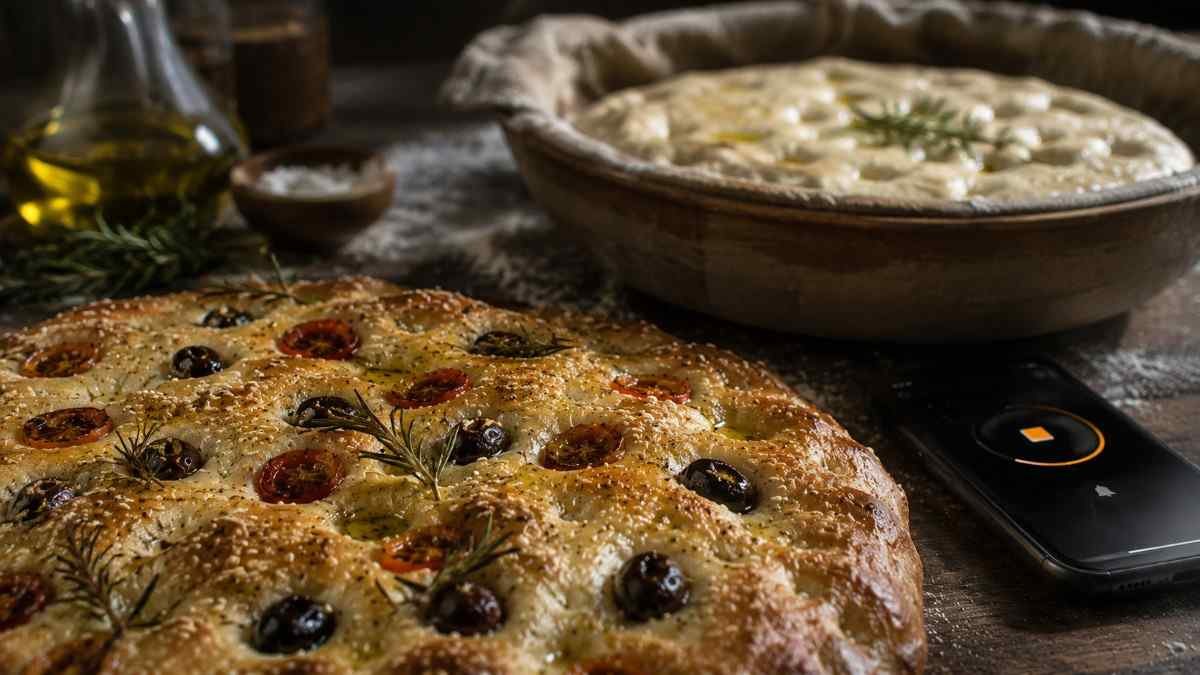
Pour 2 tablespoons of olive oil into a 9×13-inch metal baking pan and coat the bottom and sides well. For extra protection against sticking, rub a thin layer of softened butter on the pan before adding oil.
Gently transfer the chilled dough into the pan and turn it once so it is coated in oil. Let it sit uncovered at room temperature for 2 to 4 hours until it spreads, puffs, and nearly fills the pan.
Shape And Season
This is where focaccia gets its signature look.
Dimple The Dough
Preheat the oven to 425°F, or 220°C. Once the dough is puffy, drizzle the remaining olive oil evenly over the top. Oil your hands generously so your fingers glide through the dough.
Press your fingertips straight down until they touch the bottom of the pan, then wiggle slightly to make deep dimples. Avoid dragging or tearing the dough, because gentle handling protects the air pockets.
Add Rustic Toppings
Sprinkle the dough with flaky sea salt and fresh rosemary. This classic topping is simple, fragrant, and perfect for a crisp golden focaccia crust.
For a Turkish-inspired version, add sliced olives, sesame seeds, nigella seeds, cherry tomatoes, thin red onion, za’atar, pul biber, or small pieces of roasted pepper. These toppings bring color, aroma, and a rustic meze-table feel.
Keep It Balanced
Toppings should enhance the bread, not weigh it down. Too many wet vegetables can make the top soggy, so use a light hand with tomatoes, onions, and peppers.
For a healthier plate, serve focaccia with lentil soup, cucumber-tomato salad, grilled eggplant, yogurt dip, white beans, boiled eggs, or fresh herbs. This adds protein, fiber, and freshness to balance the bread.
Bake Until Golden
The bake creates the crisp crust and soft middle.
Watch The Color
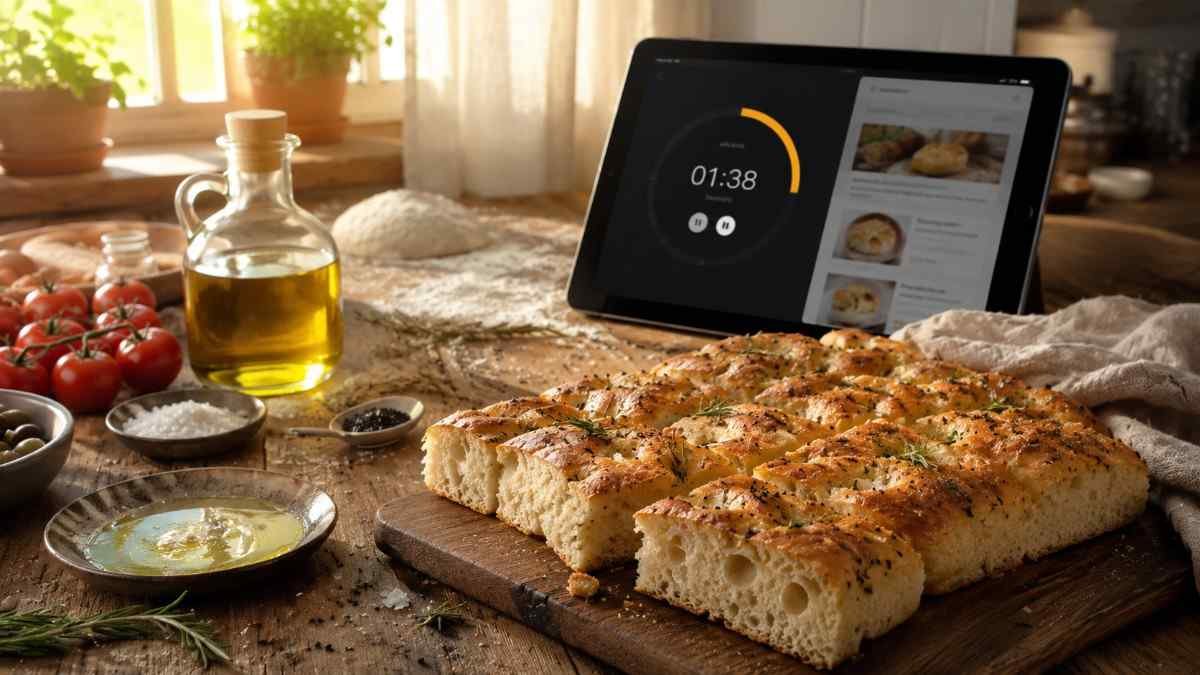
Bake the focaccia on the middle rack for 25 to 30 minutes, until the top is deep golden brown and the edges look crisp. The bottom should be firm, browned, and fragrant from the olive oil.
If the top browns too quickly, move the pan slightly lower. If the bottom looks pale, give it a few extra minutes. A metal pan gives better heat transfer than glass and helps create a crunchier base.
Cool The Right Way
Remove the focaccia from the pan soon after baking and place it on a wire rack. This keeps the bottom from steaming and turning soft.
Let it rest for at least 10 minutes before slicing. The crumb finishes setting during this short rest, so the bread cuts cleaner and keeps its pillowy texture.
Serve It Warm
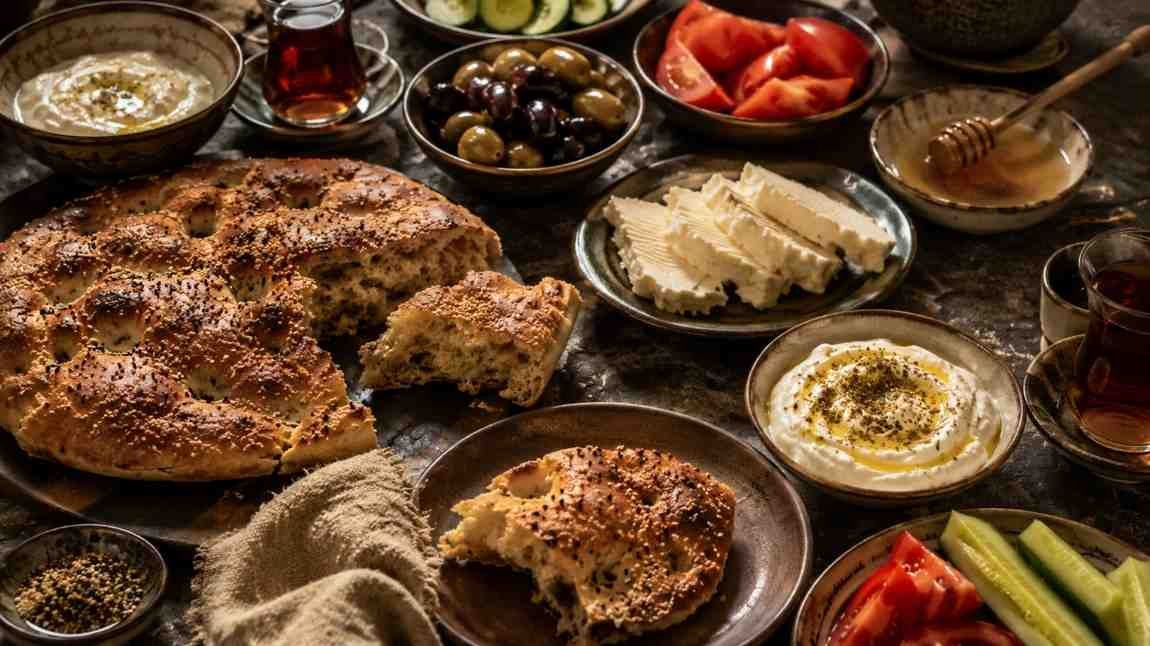
Warm focaccia tastes incredible with Turkish breakfast foods like olives, beyaz peynir, tomatoes, cucumber, eggs, honey, and tea. It also pairs well with ezme, hummus, lentil soup, grilled meats, or roasted vegetables.
Leftovers can become sandwiches with labneh, herbs, grilled eggplant, turkey, chicken, or feta-style cheese. Reheat slices in the oven or skillet to bring back the crisp edges.
Baker’s Pro Tips
These small details make the recipe more reliable.
Trust The Sticky Dough
The dough is supposed to be sticky because focaccia relies on high hydration. Adding extra flour may make handling easier, but it can make the bread dense and dry.
Use olive oil on your hands instead. This keeps the dough soft while making it easier to fold, move, and dimple.
Choose The Right Pan
A 9×13-inch pan makes thick, fluffy focaccia with a soft middle. A larger sheet pan creates thinner focaccia with more crisp edges.
For beginners, the 9×13-inch pan is the easiest choice. It gives the dough enough support, helps it rise upward, and creates the classic golden slab shape.
Try Creative Flavors
Once you master the base, play with toppings. Kalamata olives, cherry tomato halves, garlic slices, caramelized onions, rosemary, thyme, sesame, and za’atar all work well.
For a Turkish cuisine twist, try olive and nigella seed focaccia with yogurt dip, or tomato and pul biber focaccia with lentil soup. Keep the flavors bold but balanced.
Frequently Asked Questions
1. What Is The Secret To Making Good Focaccia?
The secret is using wet dough, generous olive oil, slow fermentation, and gentle handling. An overnight cold proof builds flavor, while deep dimples and a hot oven create crisp edges and big bubbles.
2. Is It Difficult To Make Focaccia Bread?
Focaccia is not difficult because it needs no mixer, no shaping skills, and no heavy kneading. The dough is sticky, but it is forgiving and becomes easier with oiled hands.
3. What Are The Ingredients To Make Focaccia Bread?
The basic ingredients are bread flour, instant yeast, kosher salt, sugar or honey, lukewarm water, and extra-virgin olive oil. Rosemary, flaky salt, olives, tomatoes, sesame, and za’atar make flavorful toppings.
4. Is Focaccia Bread Ok For Diabetics?
Focaccia is rich in carbohydrates, so portion size matters for diabetics. Choosing whole grain flour, pairing it with protein and vegetables, and following personal medical guidance can help manage blood sugar impact.
Final Slice Of Happiness
Learning how to make focaccia bread brings rustic baking into everyday life with very little stress. This easy no-knead recipe gives you a crisp olive oil crust, soft bubbly crumb, and endless topping options. Add Turkish-inspired flavors like olives, sesame, za’atar, tomatoes, and pul biber, then serve it warm with soup, meze, breakfast, or friends around the table.