


Best Drawer Organization Ideas for Cooking Tools
A messy cooking-tool drawer was just part of having a busy kitchen. Then I realized the real problem was not the number of spatulas, tongs, peelers, and measuring spoons I owned. It was that everything had no clear home. Best Drawer Organization Ideas for Cooking Tools can turn a frustrating drawer into a simple system where every tool is easy to grab while cooking.
Why Cooking Tool Drawers Get Messy So Fast
Cooking drawers get messy because they hold tools with different shapes. A ladle is bulky, a whisk tangles easily, measuring spoons disappear, and tongs can block the drawer from closing. When every item is tossed into one space, even a large drawer starts to feel too small.
The best solution is not always buying more containers. First, the drawer needs a purpose. One drawer may hold daily cooking utensils, another may hold baking tools, and another may store sharp items safely. This zoning method makes the kitchen easier to use because tools stay close to where they are needed.
What to Remove Before Organizing Cooking Tools
Before adding dividers or trays, empty the entire drawer. I like doing this on the counter because it shows how many duplicate tools are hiding in one place. Remove nonstick skillets, rusty peelers, broken tongs, extra can openers, cracked measuring cups, and gadgets that are never used.
Keep the tools that match daily cooking habits. If a tool is used only for holidays, grilling, or special baking projects, it does not need to live in the main cooking drawer. Moving rarely used items to a pantry bin or upper cabinet instantly creates more space.
Best Drawer Organization Ideas That Actually Work
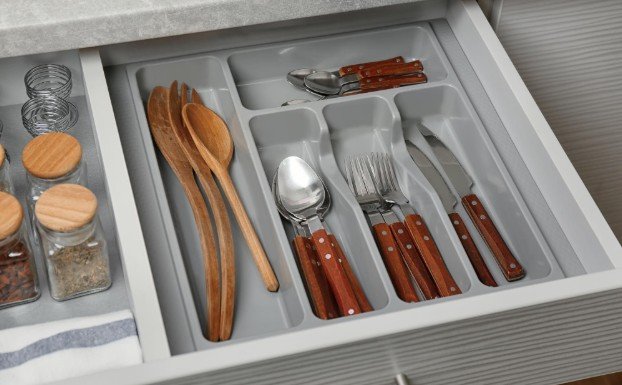
The easiest way to organize cooking tools is to group them by task. Keep spatulas, wooden spoons, turners, and tongs together because they are usually used near the stove. Keep peelers, pizza cutters, thermometers, and measuring spoons in smaller sections so they do not get buried.
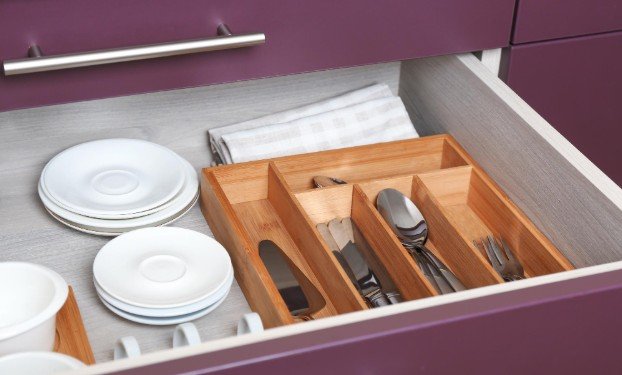
Expandable bamboo dividers work well for long utensils because they adjust to different drawer widths. Modular plastic bins are useful for small tools because they can be moved around as the drawer changes. A non-slip liner helps stop tools from sliding every time the drawer opens.
Use Deep Drawers for Bulky Cooking Tools
Deep drawers are perfect for large tools, but they can become messy without structure. Use adjustable peg dividers to hold mixing bowls, lids, strainers, and oversized utensils upright. This prevents stacking problems and makes it easier to pull out one item without disturbing everything else.
For deep drawers near the stove, keep high-use tools in the front. Bulky items used less often can go toward the back. This simple front-to-back priority system saves time during busy cooking.
Create a Safer Knife and Sharp Tool Drawer
Knives should never roll loosely beside spatulas and spoons. If knives are stored in a drawer, use an in-drawer knife block or protective blade guards. This protects the blades and keeps hands safe when reaching into the drawer.
Sharp peelers, graters, kitchen shears, and mandolines should also have their own section. Mixing sharp tools with silicone spatulas or wooden spoons can damage softer items and make the drawer unsafe.
Small Kitchen Drawer Organization Ideas
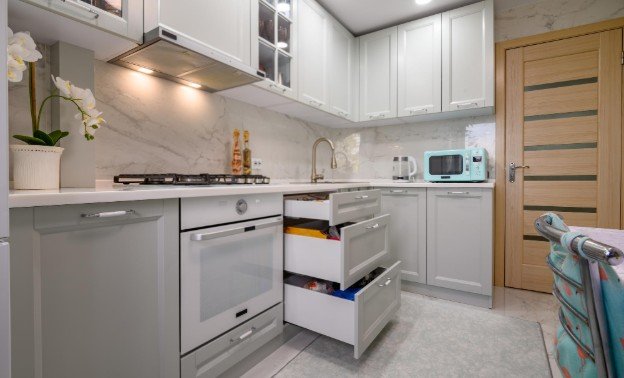
Small kitchens need stricter editing. Instead of storing every cooking tool in one drawer, keep only daily-use tools there. A narrow tray can hold peelers, measuring spoons, and thermometers, while longer dividers can hold spatulas and tongs.
If drawer space is limited, move less-used tools to a cabinet basket. Countertop crocks can work for wooden spoons and spatulas, but only if they do not make the counter feel crowded. The goal is to keep the most useful tools close, not to display everything.
Where to Place Cooking Tool Drawers
Drawer placement matters as much as drawer dividers. Cooking utensils should stay near the stove. Measuring cups and spoons should stay close to baking supplies. Food wrap and storage bags should be near prep space or food containers.
This workflow approach makes the kitchen feel smoother. Instead of walking across the room for a whisk or digging for tongs while food is cooking, the right tool is already near the task.
How to Keep Cooking Tool Drawers Organized
The best system is not the most expensive one. It is the one that matches how the kitchen is actually used. When every tool has a simple place, the drawer stays cleaner with less effort.
Frequently Asked Questions
1. What are the Best Drawer Organization Ideas for Cooking Tools?
The best ideas include decluttering first, using expandable dividers, grouping tools by task, adding knife inserts, using small bins, and keeping daily utensils near the stove.
2. How do you organize spatulas and tongs in a drawer?
Place spatulas, tongs, turners, and wooden spoons in one long divider near the front of the drawer so they are easy to grab while cooking.
3. What is the best organizer for kitchen utensils?
An expandable bamboo or adjustable divider is one of the best choices because it can fit different drawer sizes and hold long cooking tools neatly.
4. Should knives be stored in a drawer?
Yes, knives can be stored in a drawer, but they should be placed in an in-drawer knife block or covered with blade guards for safety.
Final Thoughts
I like drawer organization because it makes the kitchen feel calmer without requiring a full renovation. A clean cooking-tool drawer saves time, protects utensils, and makes everyday meals easier to prepare.
When I remove duplicates, group tools by task, and keep the most-used items near the stove, the entire kitchen feels more practical. A drawer does not need to be perfect. It just needs to work every time it opens.