


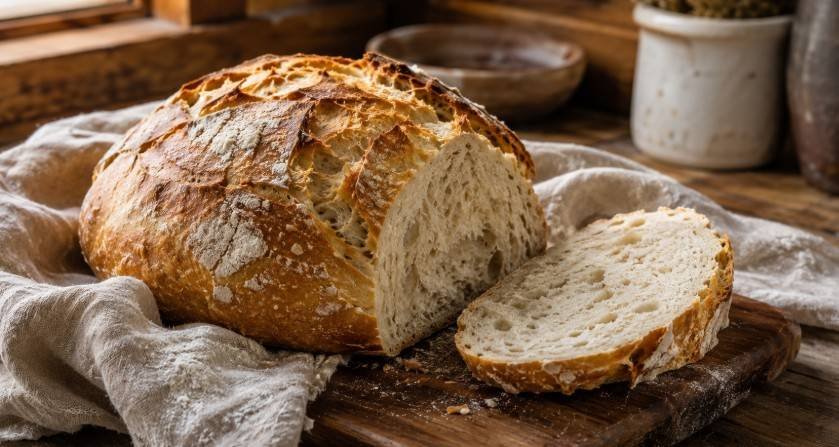
Can Bread Be Made Without Kneading? Rustic Bread Guide
Fresh bread has a way of making a kitchen feel warmer before the first slice is even cut. The question can bread be made without kneading comes up often, especially for home bakers who want a rustic loaf without tiring their hands or using a mixer.
Yes, absolutely. Bread can be made without kneading by mixing a wetter dough and letting time do the work. Long, slow fermentation builds gluten, improves flavor, and creates the chewy crumb and crisp crust people love in homemade artisan bread.
Key Takeaways
- No-knead bread is easy, and beginner-friendly.
- Time replaces hand kneading.
- Wet dough builds gluten naturally.
- A Dutch oven improves the crust.
- Slow fermentation gives better flavor.
Why No-Knead Works
No-knead bread works because dough can develop strength without constant handling.
Gluten Forms With Time
Traditional kneading stretches and aligns gluten proteins so bread can rise and hold shape. In no-knead bread, time performs that same job more gently. Once flour meets water, gluten begins forming on its own.
A long rest gives the dough room to hydrate, stretch, and strengthen. That is why many rustic no-knead bread recipes rise for several hours or overnight. The dough may look loose at first, but it becomes stronger as it rests.
This slow gluten development is one reason no-knead bread often has a chewy texture and open crumb. It feels rustic, hearty, and handmade without demanding much effort.
Wet Dough Builds Structure
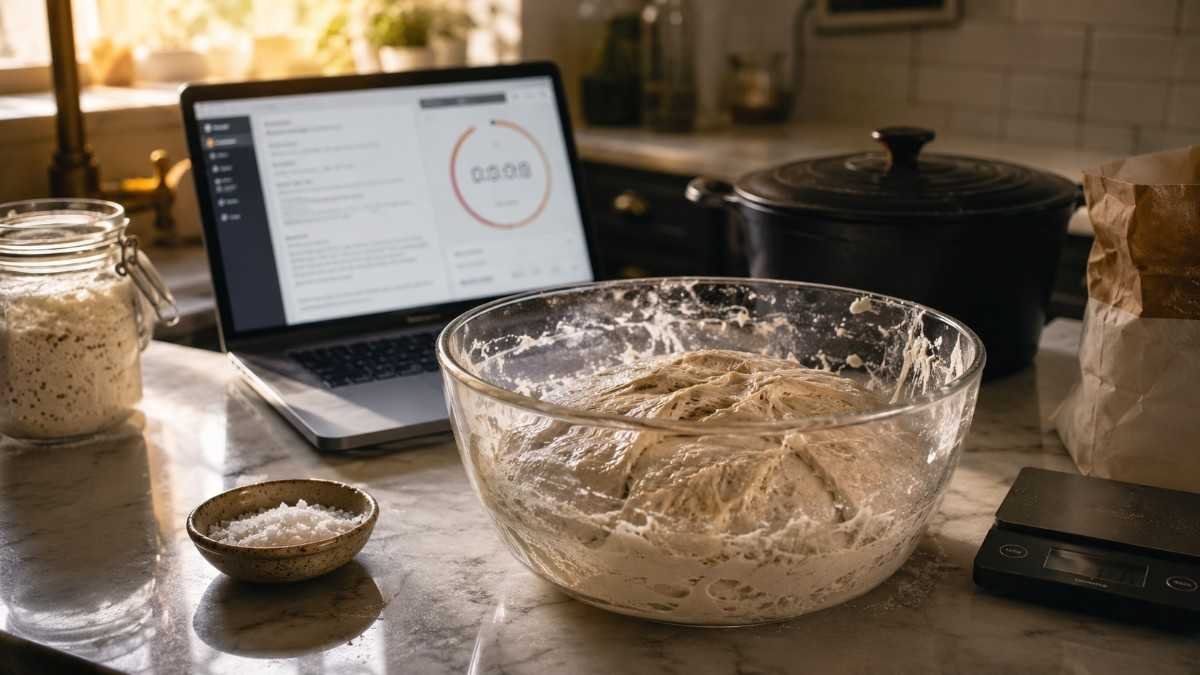
No-knead dough is usually wetter than regular sandwich bread dough. That extra moisture helps the flour absorb water fully and allows gluten strands to move and connect naturally.
The dough may feel sticky, shaggy, and uneven after mixing. That is normal. Adding too much flour can make the loaf heavy, dry, or dense, so resist the urge to fix the stickiness too quickly.
In rustic baking, a wetter dough often means better oven spring, a more open crumb, and a crust that crackles beautifully after cooling.
Fermentation Adds Flavor
Yeast does more than make bread rise. During fermentation, yeast creates gas, aroma, and flavor. A longer rise allows the dough to develop a deeper taste than a quick loaf.
This is why no-knead bread can taste slightly nutty, earthy, and complex even though the ingredient list is short. Flour, water, yeast, and salt become much more flavorful when given time.
Slow fermentation also makes the bread feel more artisan. The loaf may not look perfectly uniform, but that rustic character is part of its charm.
How To Make It: Bread Without Kneading
Here is the simple method that answers can bread be made without kneading in the most practical way.
Mix The Dough
Start by combining flour, yeast, and salt in a large bowl. Stir in water until the mixture becomes shaggy, wet, and sticky. You do not need to knead, beat, or use a stand mixer.
The goal is only to hydrate the flour. Once no dry patches remain, the dough is ready to rest. It should look rough, not smooth. Cover the bowl loosely with a lid, towel, or wrap. Choose a bowl large enough for the dough to expand as it rises.
Let It Rise
Let the dough rise at room temperature until it looks puffy and bubbly. Depending on the recipe, room temperature, and yeast amount, this can take anywhere from two hours to overnight.
For the best rustic flavor, a longer rise is usually better. Overnight fermentation gives the dough time to develop gluten and a deeper bread aroma.
Watch the dough more than the clock. It should show bubbles on the surface, feel airy, and look alive before shaping.
Shape And Bake
Turn the dough onto a lightly floured surface. Gently fold the edges toward the center and shape it into a loose ball. Do not punch it down hard, because those air bubbles help create a lighter crumb.
Let the shaped dough rest while the oven heats. A hot oven helps the loaf rise quickly and form a strong crust.
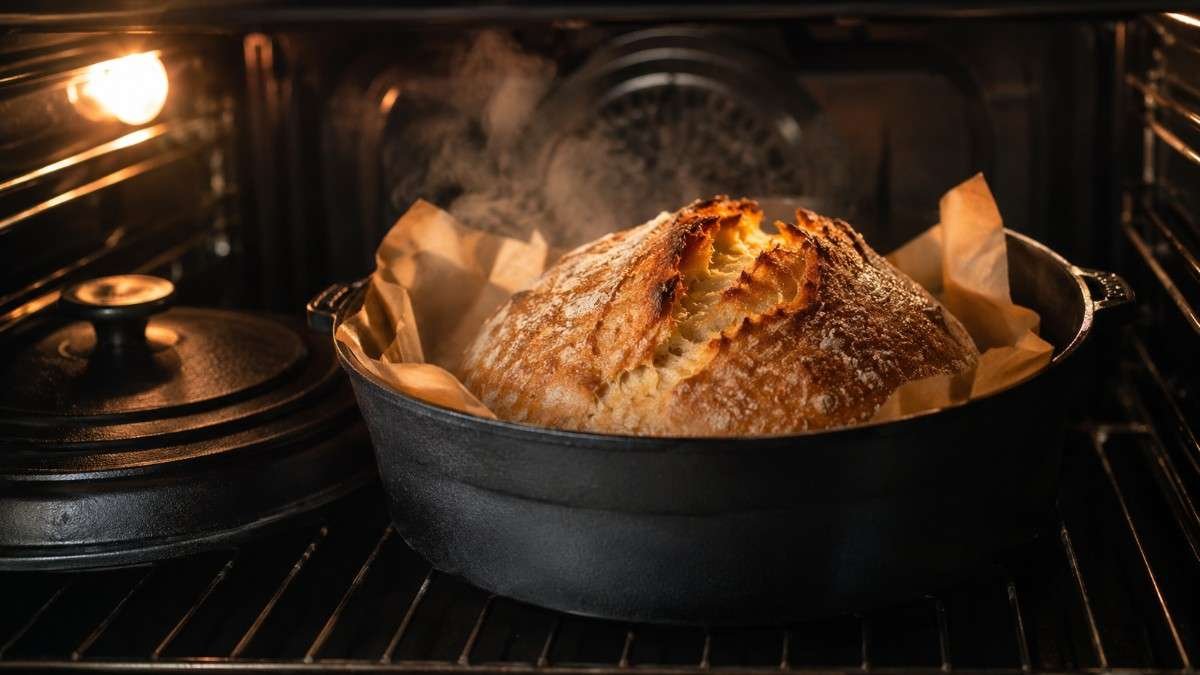
Bake the dough in a preheated Dutch oven if possible. The covered pot traps steam, helping the bread rise high before the crust turns golden and crisp.
Best Tools For Rustic Bread
You do not need fancy equipment, but a few tools can make no-knead bread easier and more consistent.
Dutch Oven Advantage
A Dutch oven is one of the best tools for rustic no-knead bread. It stores heat well and creates a steamy baking space around the dough.
Steam keeps the surface soft during the first part of baking, allowing the loaf to expand. Once the lid comes off, the crust browns and becomes crisp.
This is how home bakers can get a bakery-style crust without a professional steam oven.
No Dutch Oven Options
No Dutch oven is not a deal breaker. You can bake no-knead bread or even a sourdough bread on a hot baking stone, cast-iron skillet, or sturdy baking sheet.
To create steam, place a metal pan on the lower rack and carefully add hot water when the bread goes in. Another option is covering the dough with an oven-safe metal bowl during the first part of baking.
The crust may be slightly different, but the bread can still be delicious, rustic, and satisfying.
Great Recipes To Start With
The best first recipe is simple, forgiving, and made with pantry staples.
Classic Crusty Loaf
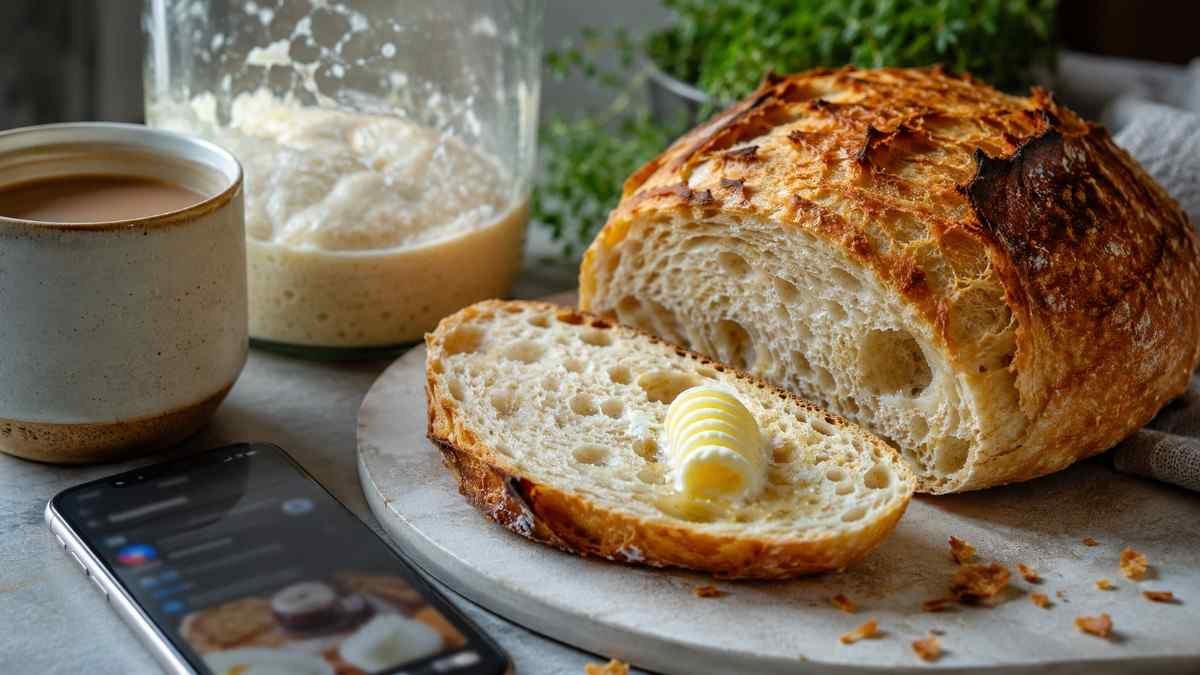
A classic crusty no-knead loaf uses flour, water, salt, and yeast. It rises slowly, bakes hot, and gives you a crackly crust with a soft interior.
This style is perfect with soups, stews, roasted vegetables, eggs, pasta, or a swipe of butter. It is the kind of everyday rustic bread that makes simple meals feel special.
Bread flour gives more chew, while all-purpose flour keeps the loaf tender. Both can work well for beginners.
Softer Sandwich Loaf
If you prefer bread for toast or sandwiches, use a slightly less wet dough and bake it in a loaf pan. This gives the bread more structure and a softer crust.
A no-knead sandwich loaf may rise faster than an overnight artisan loaf. It is useful for school lunches, breakfast toast, or simple weekday meals. This version is less dramatic than a Dutch oven boule, but it is practical, sliceable, and family-friendly.
Common No-Knead Mistakes
Most no-knead bread problems are easy to fix once you understand the dough.
Bread Turns Dense
Dense bread often happens when too much flour is added, the yeast is weak, or the dough has not risen enough. Sticky dough can be uncomfortable, but it often bakes better than dry dough.
Measure flour carefully and avoid packing it into the cup. Spoon it in lightly, then level it.
Also check that your yeast is fresh. Old yeast may not create enough lift for a good loaf.
Loaf Spreads Too Much
A spreading loaf usually means the dough is very wet, overproofed, or not shaped with enough tension. A gentle fold before baking can help the dough hold itself better.
Use a floured surface and a dough scraper if the dough feels hard to handle. Try not to add handfuls of flour. Parchment paper can also help transfer the shaped dough without flattening it.
Frequently Asked Questions
1. What Happens If You Bake Bread Without Kneading?
Bread can still rise, bake, and taste wonderful without kneading. The dough simply needs enough hydration and resting time so gluten can form naturally before it goes into the oven.
2. Is Homemade Bread Ok For Diabetics?
Homemade bread may fit some diabetic meal plans, but portion size, flour type, and blood sugar response matter. Whole grain options may help, but medical guidance is best.
3. Can Yeast Bread Cause Stomach Pain?
Yeast bread can cause discomfort for some people due to wheat sensitivity, gluten issues, large portions, or digestive conditions. Ongoing stomach pain should be discussed with a healthcare professional.
4. How To Make Bread With No Kneading?
To make no-knead bread, mix flour, water, yeast, and salt, let the dough rise until bubbly, shape it gently, rest it again, and bake it hot.
Crusty Magic Without The Workout
So, can bread be made without kneading? Yes, and it may be one of the most rewarding rustic baking methods to try at home. You mix a sticky dough, let fermentation build structure, shape it gently, and bake it hot. The result is simple, crusty, flavorful bread with very little effort and plenty of homemade charm.