


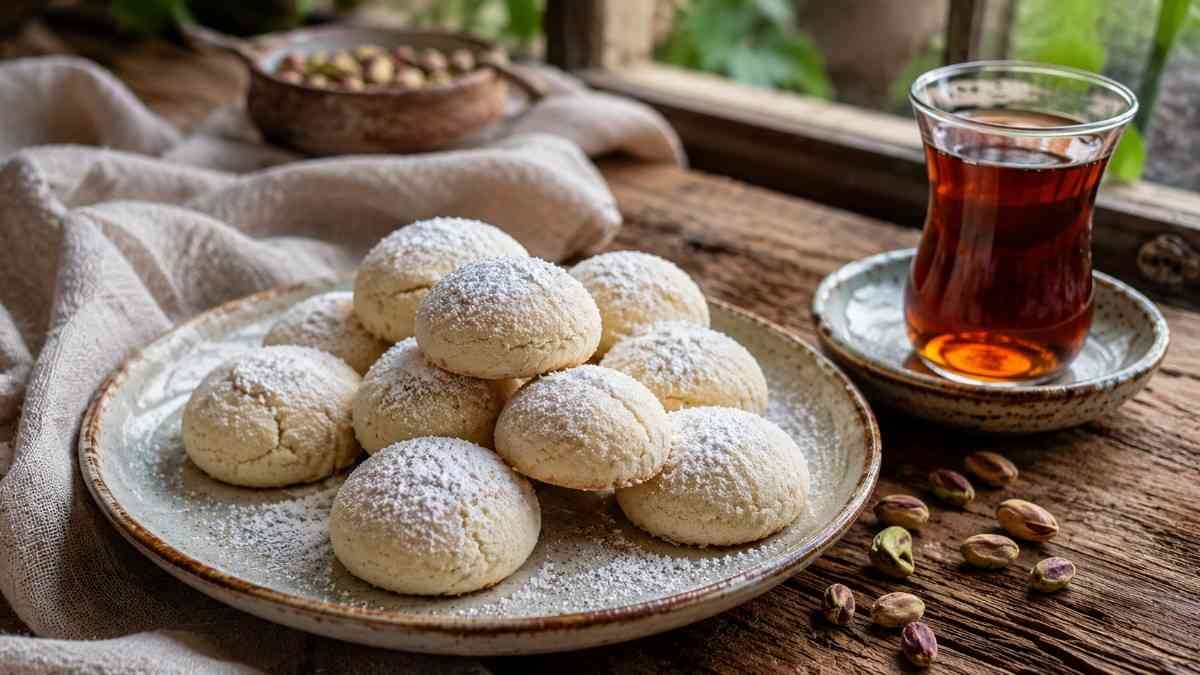
Kurabiye Turkish Cookies: Crumbly Turkish Tea-Time Bites
A warm tray of Kurabiye Turkish cookies has the kind of charm that makes a kitchen feel instantly homier. These traditional Turkish cookies are simple, crumbly, buttery, and perfect with tea. They belong beautifully in rustic baking because they rely on basic ingredients, gentle hands, and old-fashioned comfort instead of fancy decoration.
Key Takeaways
- Kurabiye is a family of Turkish cookies and shortbreads.
- Un kurabiyesi is the classic flour cookie.
- Elmalı kurabiye has apple, cinnamon, and walnuts.
- Tuzlu kurabiye is the savory tea-time version.
- These cookies are best baked pale and tender.
What Is Kurabiye?
Kurabiye refers to a beloved family of Turkish cookies, biscuits, and shortbreads known for their dry, crumbly texture. The word is often linked to “kuru,” meaning dry, and “biye,” meaning biscuit, which suits these tender tea-time treats perfectly.
In Turkish cuisine, kurabiye is not just one recipe. It can be sweet, savory, filled, nutty, plain, buttery, or shaped for special occasions. That variety is why one person may think of powdered sugar cookies, while another remembers apple-filled crescents.
The most familiar version for many home bakers is un kurabiyesi, also called Turkish flour cookies. These pale cookies crumble the moment you bite into them and are usually served beside a hot glass of Turkish tea.
Common Kurabiye Varieties
Turkish cuisine has many kurabiye styles, and each one brings a different mood to the table.
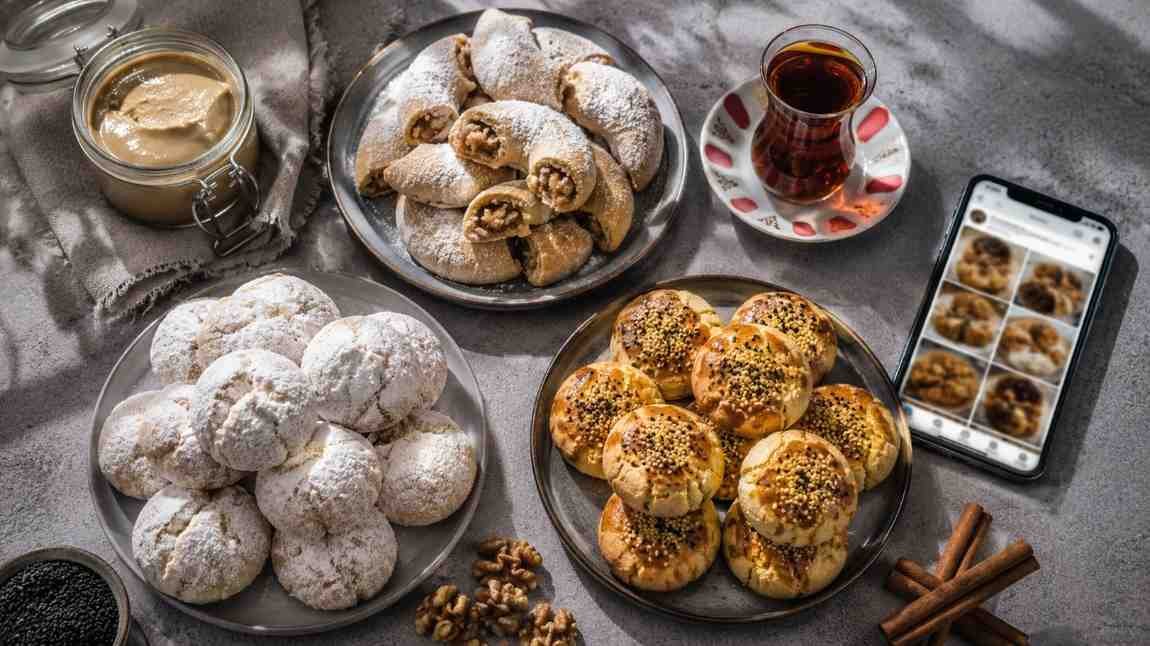
Un Kurabiyesi
Un kurabiyesi is the iconic Turkish flour cookie. It is made with flour, butter, powdered sugar, and often cornstarch or wheat starch. The texture should be soft, sandy, and melt-in-your-mouth rather than chewy or crisp.
These cookies are usually pale, lightly sweet, and dusted with powdered sugar after cooling. They are classic tea cookies, especially for quiet afternoons, holiday trays, and simple homemade gifts.
For the best result, avoid overbaking. The tops should stay light while the bottoms turn barely golden. That pale finish is part of the cookie’s traditional charm.
Elmalı Kurabiye
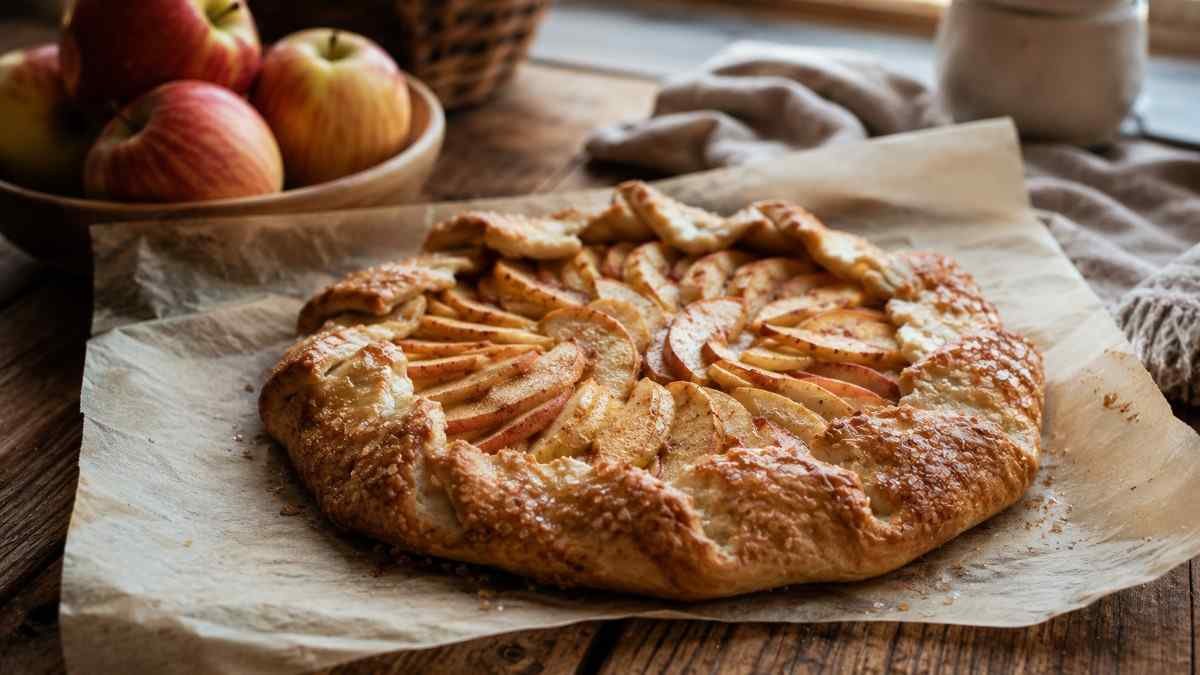
Elmalı kurabiye means Turkish apple cookies. These are delicate pastries filled with cooked apple, cinnamon, sugar, and usually walnuts. They are often shaped into crescents, rolls, or small folded parcels.
The dough is soft and buttery, but it behaves more like a tender pastry than a dry shortbread. The filling adds moisture, warmth, and a cozy fruit flavor that feels perfect for autumn baking.
Because apples and walnuts bring fiber, minerals, and natural sweetness, this variety feels a little more wholesome. It is still a dessert, but it offers more texture and depth than a plain sugar cookie.
Tuzlu Kurabiye
Tuzlu kurabiye is the savory side of the kurabiye family. These salty Turkish cookies are often made with flour, oil or butter, vinegar, and sometimes mahlep, a fragrant spice used in Mediterranean and Middle Eastern baking.
They may be topped with sesame seeds, black cumin seeds, or nigella seeds. The result is crumbly, rich, and slightly tangy, making them excellent with black tea.
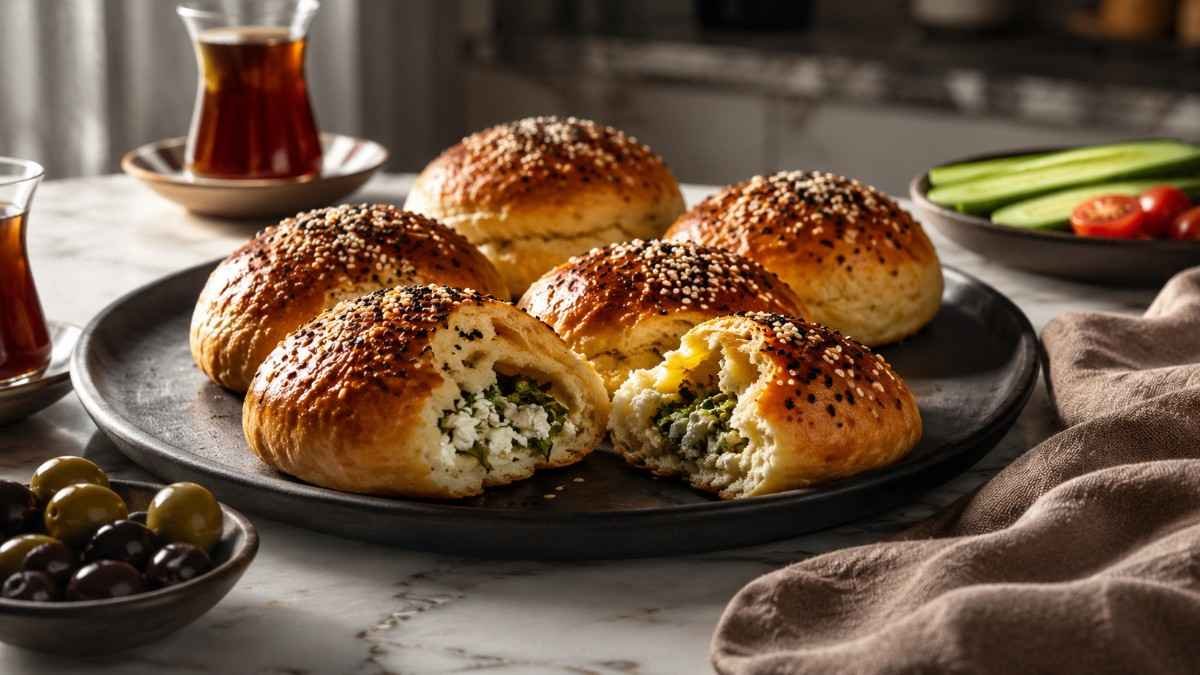
This variety is useful when you want a snack that is not overly sweet. It works well on breakfast boards, tea trays, and mezze-style spreads with cheese, olives, and cucumbers.
More Traditional Favorites
Beyond the most common types, kurabiye can become nutty, fragrant, and festive with a few regional touches.
Tahinli Kurabiye
Tahinli kurabiye is made with tahini, the rich sesame paste used across Turkish and Middle Eastern kitchens. It has a dense, nutty bite and often includes chopped walnuts for extra crunch.
Tahini adds plant-based fats, minerals, and a naturally deep flavor. Its earthy taste balances the sweetness, so these cookies feel satisfying without needing frosting or heavy decoration.
This version is wonderful for rustic baking because it looks simple but tastes layered. Serve it with coffee, strong tea, or a glass of milk.
Pistachio And Almond Kurabiye
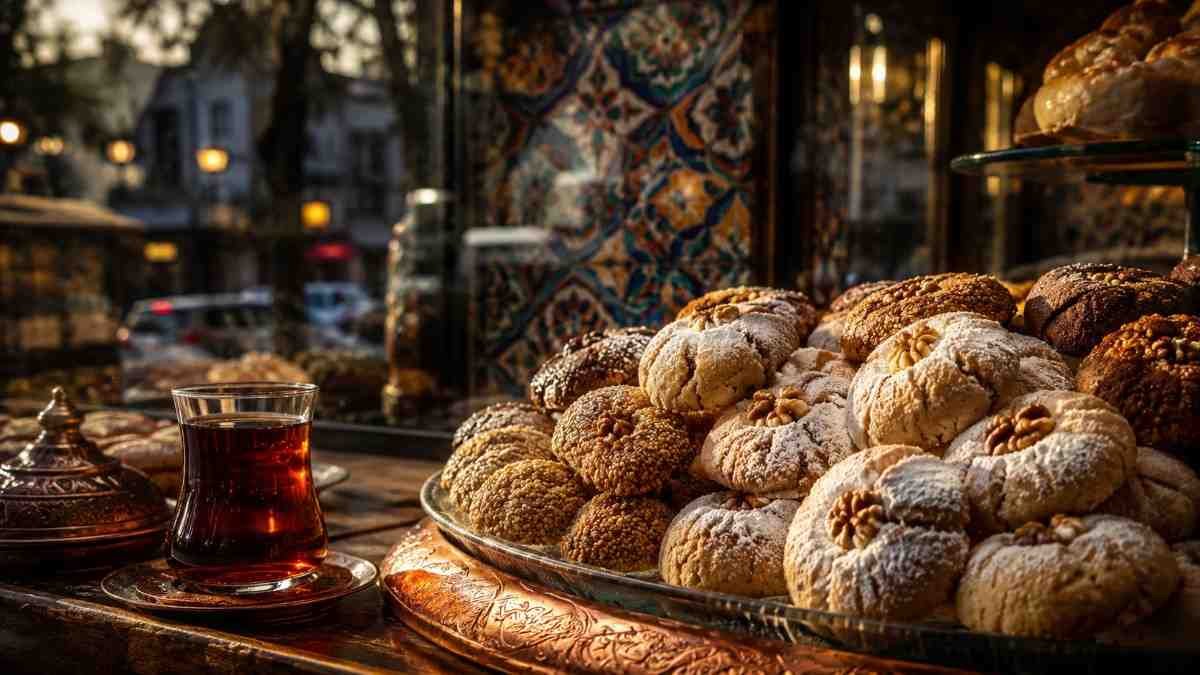
Pistachio and almond kurabiye bring color, aroma, and a slightly luxurious feel. Finely ground nuts can be mixed into the dough or sprinkled over the top before baking.
Nuts add vitamin E, fiber, healthy fats, and a richer mouthfeel. They also help make the cookies more filling, which can support mindful portions.
These are lovely for gifting because they look elegant without much effort. A little powdered sugar and chopped pistachio can make a humble cookie feel bakery-worthy.
How To Make Kurabiye Turkish cookies
Making Kurabiye Turkish cookies is simple, but the texture depends on patience and gentle mixing.
Prepare The Dough
Start with room-temperature butter, powdered sugar, vanilla, cornstarch, and all-purpose flour. Beat the butter and sugar until creamy, then add vanilla and starch. Mix in flour gradually until the dough feels soft, smooth, and easy to shape.
Do not knead the dough like bread. Overworking builds gluten, and gluten makes cookies firm. Kurabiye dough should be handled lightly, almost like shortbread dough.
If the dough feels sticky, chill it for a short time instead of adding too much flour. If it feels dry and cracks heavily, add a tiny spoon of oil or milk.
Shape And Bake
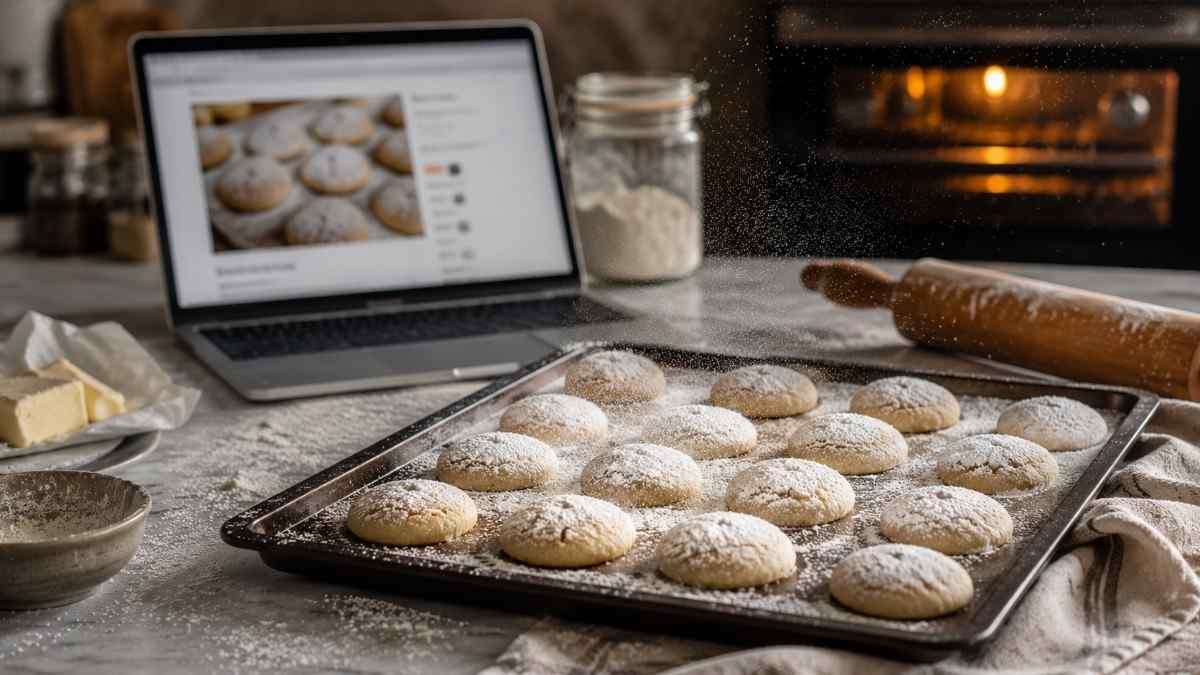
Shape the dough into small logs, ovals, crescents, or rounds. For a classic bakery look, press the tops lightly with a fork. Keep the cookies similar in size so they bake evenly.
Bake them at a moderate-low temperature until they are set but still pale. The bottoms should be lightly colored, while the tops remain soft-looking and light.
Let the cookies cool on the tray before moving them. Warm kurabiye is delicate and may break if handled too soon.
Finish And Serve
Once cooled, dust sweet kurabiye with powdered sugar. For savory tuzlu kurabiye, brush with egg wash before baking and sprinkle with sesame or black cumin seeds.
Serve sweet versions with Turkish tea, coffee, or warm milk. Serve savory versions with olives, cheese, tomatoes, cucumbers, and strong black tea.
For storage, keep cooled cookies in an airtight tin. Most un kurabiyesi cookies taste even better the next day because the butter and vanilla settle into the crumb.
Smart Baking Tips
Great kurabiye depends on texture, not complicated technique.
Keep The Crumb Tender
Use powdered sugar instead of granulated sugar for a finer bite. Add starch for that signature crumble, but do not overdo it. Too much starch can make the cookie overly fragile.
Measure flour carefully. Spoon it into the cup and level it, or use a kitchen scale for accuracy. Too much flour is the main reason Turkish flour cookies turn dry.
Cool cookies fully before dusting with sugar. If they are warm, the sugar can melt and disappear into the surface.
Add Flavor With Care
Vanilla is classic, but orange zest, lemon zest, mahlep, cinnamon, cardamom, pistachio, tahini, or walnuts can make the dough more personal.
For apple-filled elmalı kurabiye, cook the apple filling first so excess moisture evaporates. This keeps the dough from turning soggy.
For savory tuzlu kurabiye, a splash of vinegar can improve the crumbly bite. The flavor will not taste sharp after baking as does rustic custard and cake desserts.
Frequently Asked Questions
1. What Makes Kurabiye Different From Other Cookies?
Kurabiye is usually more crumbly, pale, and delicate than chewy American-style cookies. Many versions use powdered sugar, starch, butter, nuts, or savory seeds for a tender tea-time texture.
2. What Kind Of Dough Is Used For Elmalı Kurabiye?
Elmalı kurabiye uses a soft, buttery pastry-style dough that wraps around cooked apple, cinnamon, and walnut filling. It should be tender enough to shape but firm enough to hold the fruit.
3. What Is A Kurabiye?
A kurabiye is a Turkish cookie or biscuit. It can be sweet, savory, filled, plain, nutty, buttery, or crisp, depending on the regional recipe and occasion.
4. Is Kurabiye Similar To Shortbread?
Yes, un kurabiyesi is similar to shortbread because it is buttery, crumbly, and simple. Turkish versions often use powdered sugar and starch for a softer, melt-away texture.
Sweet Crumbs, Happy Cups
Turkish kurabiye cookies are proof that rustic baking does not need to be complicated to feel special. From buttery un kurabiyesi to apple-filled elmalı kurabiye, salty tuzlu kurabiye, and nutty tahinli kurabiye, each version brings Turkish cuisine to the table with warmth, texture, and tradition. Bake them pale, share them slowly, and let tea time do the rest.